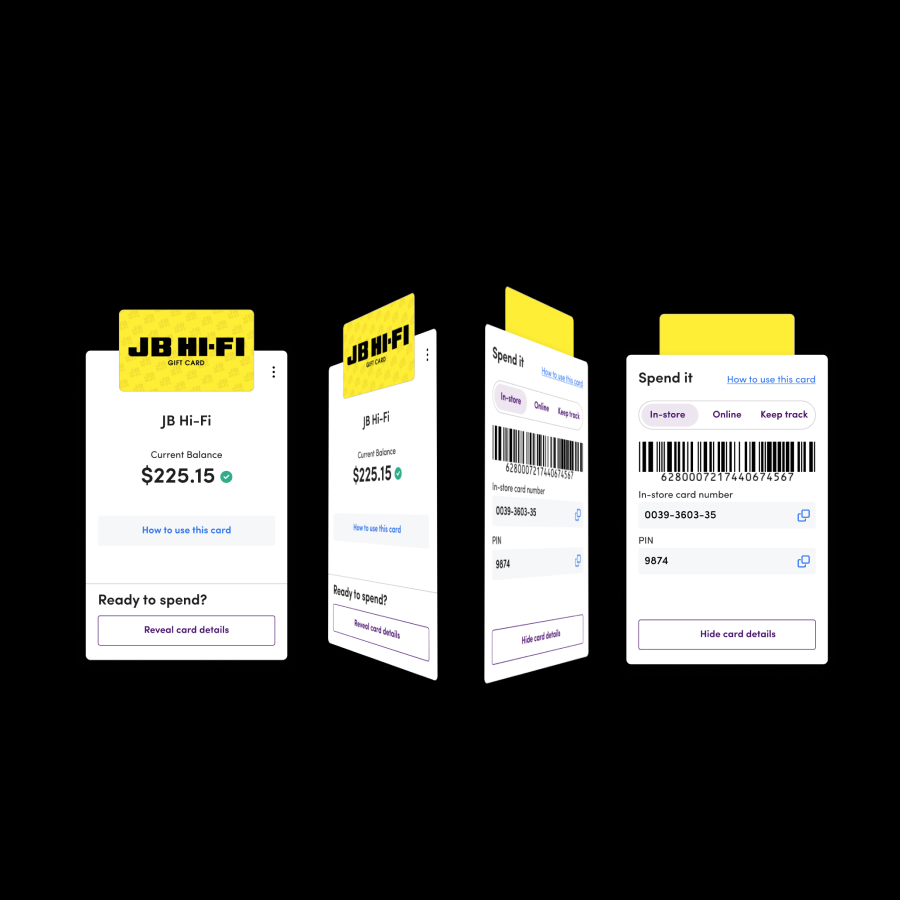
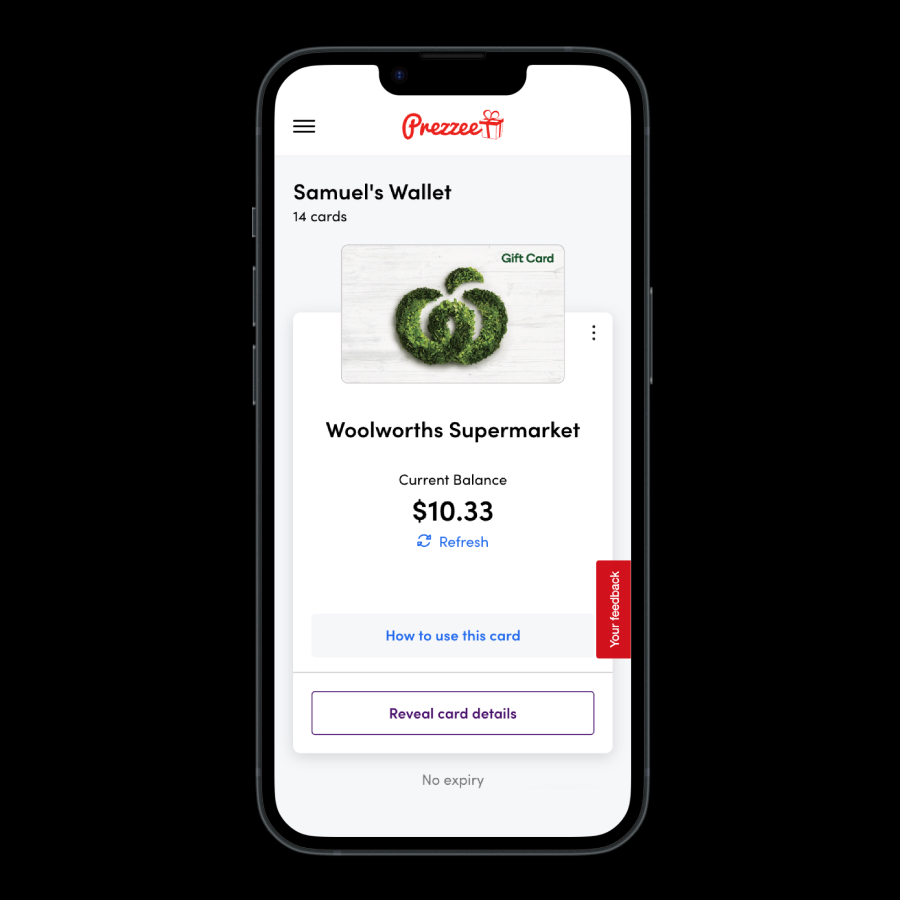
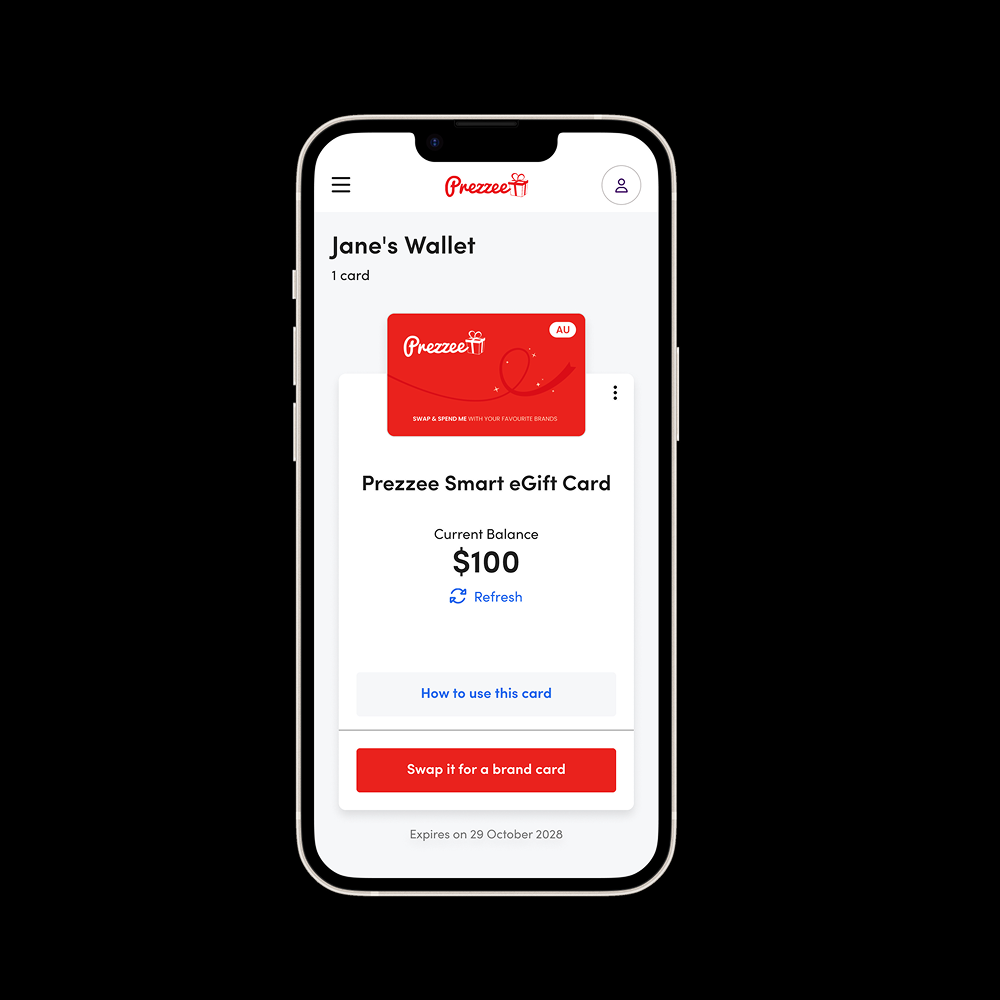
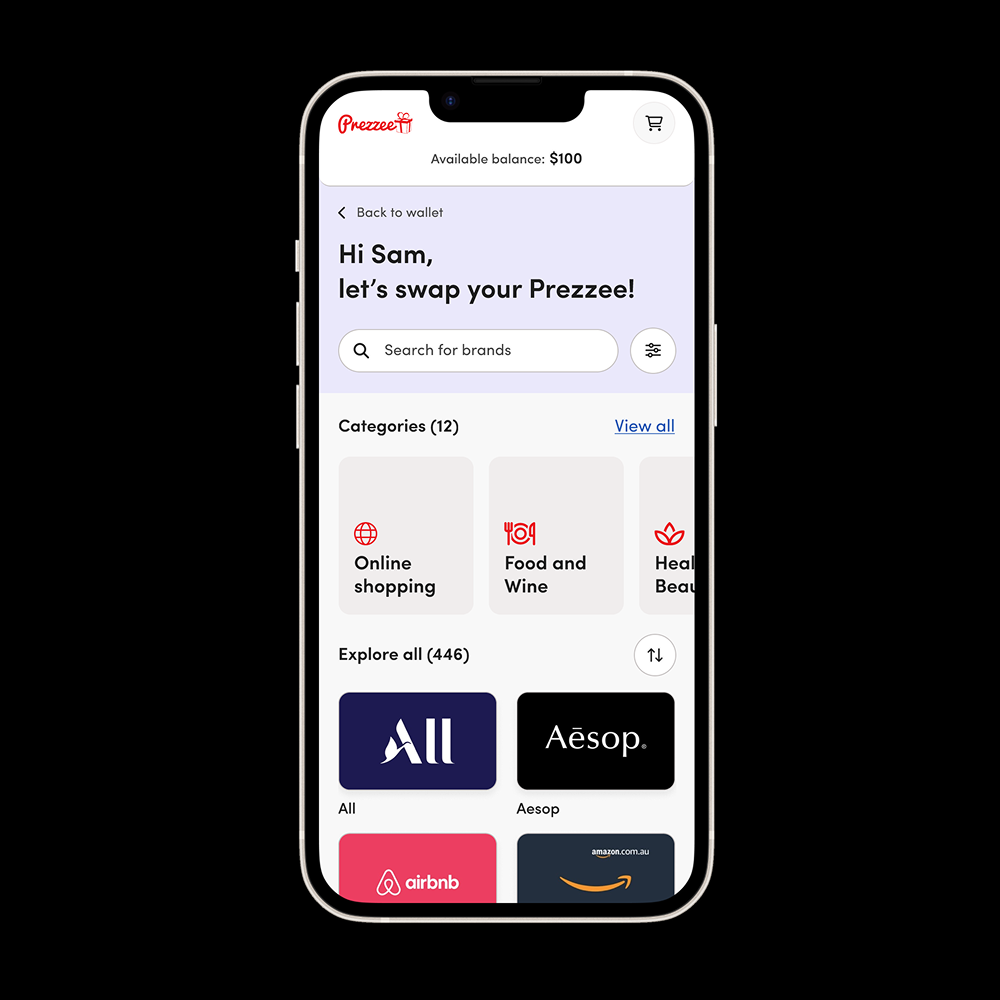
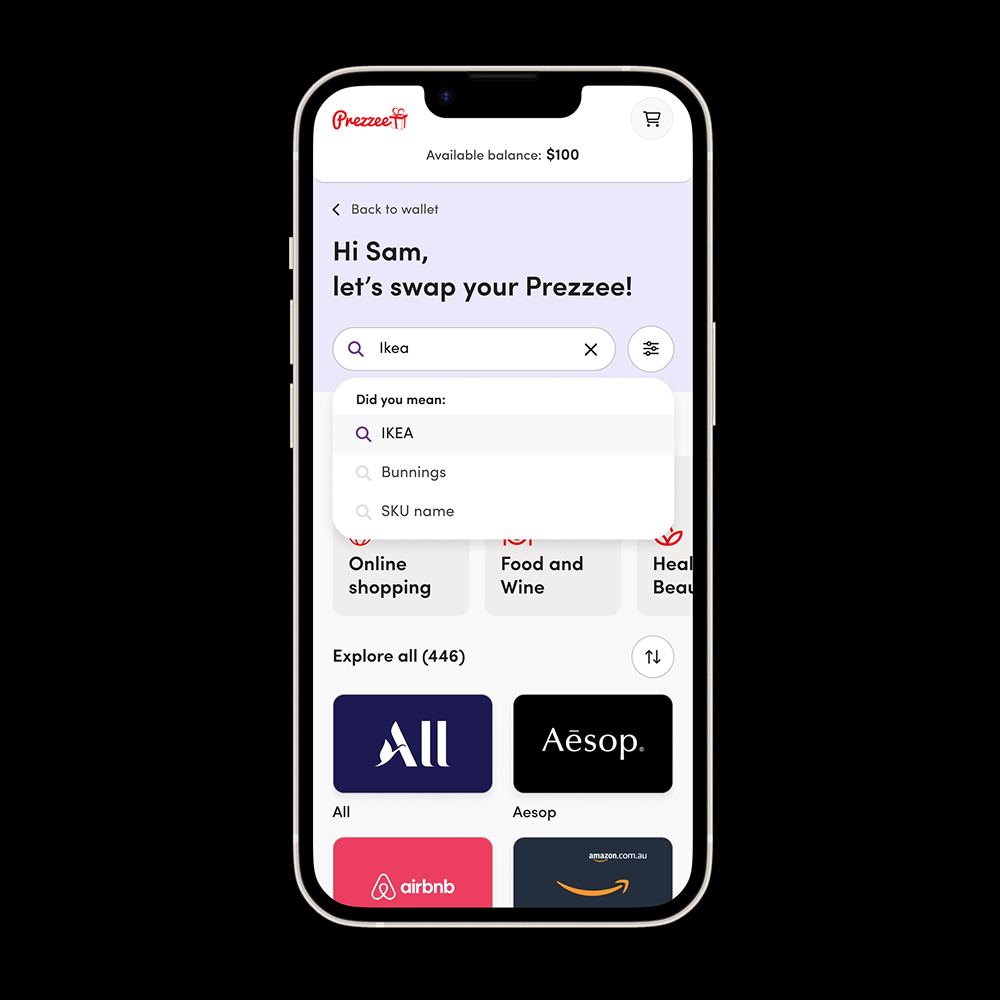
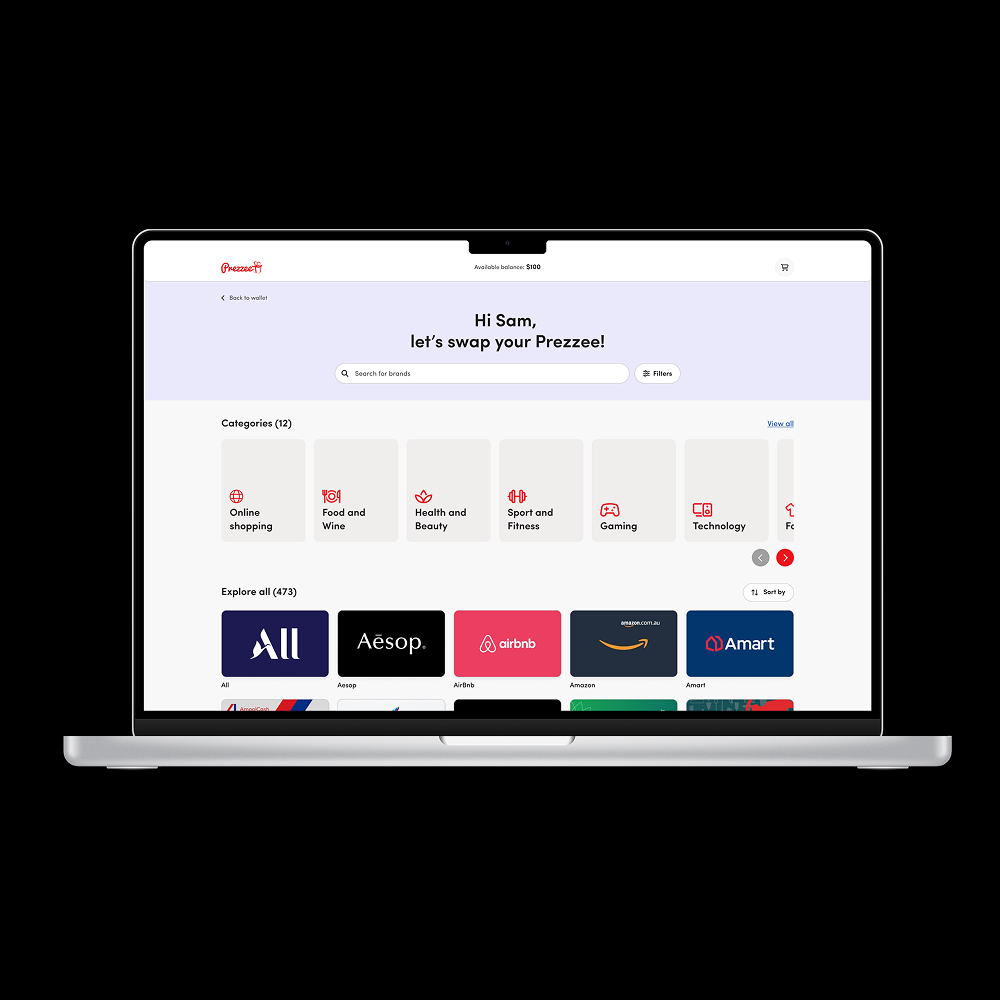
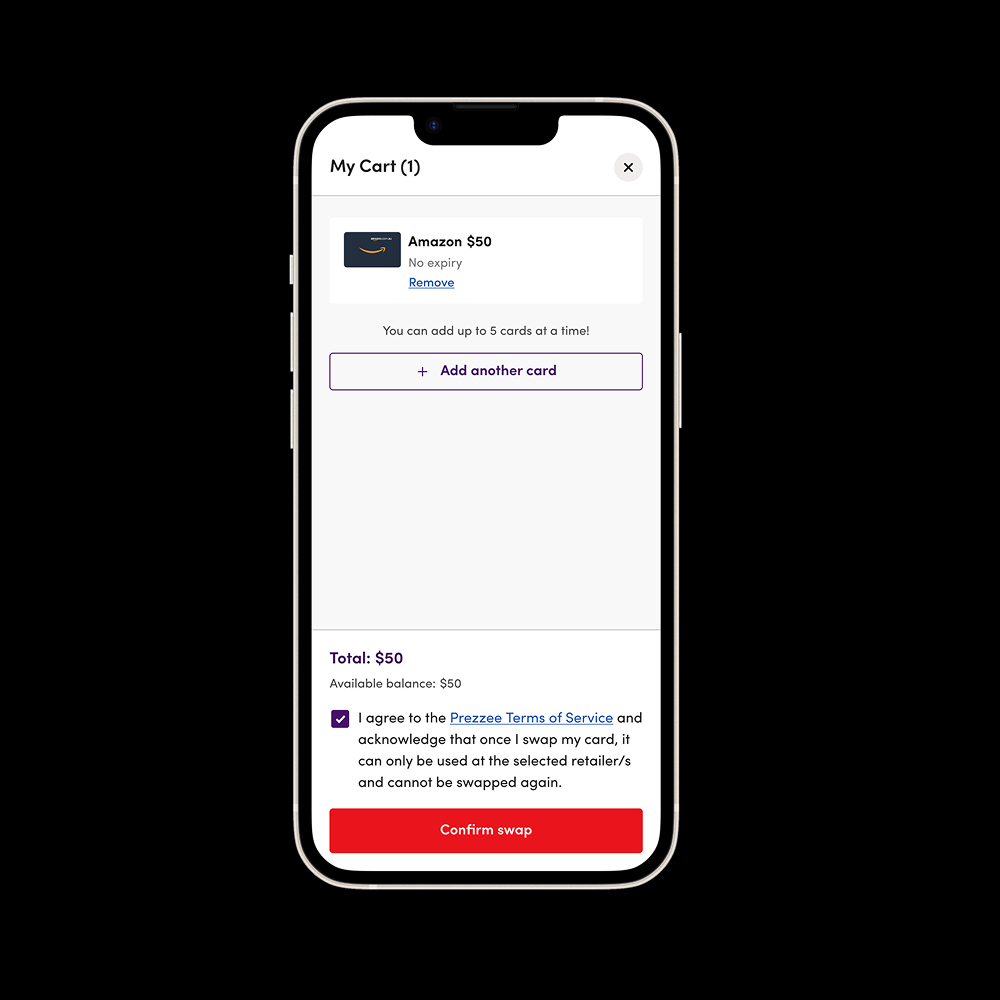
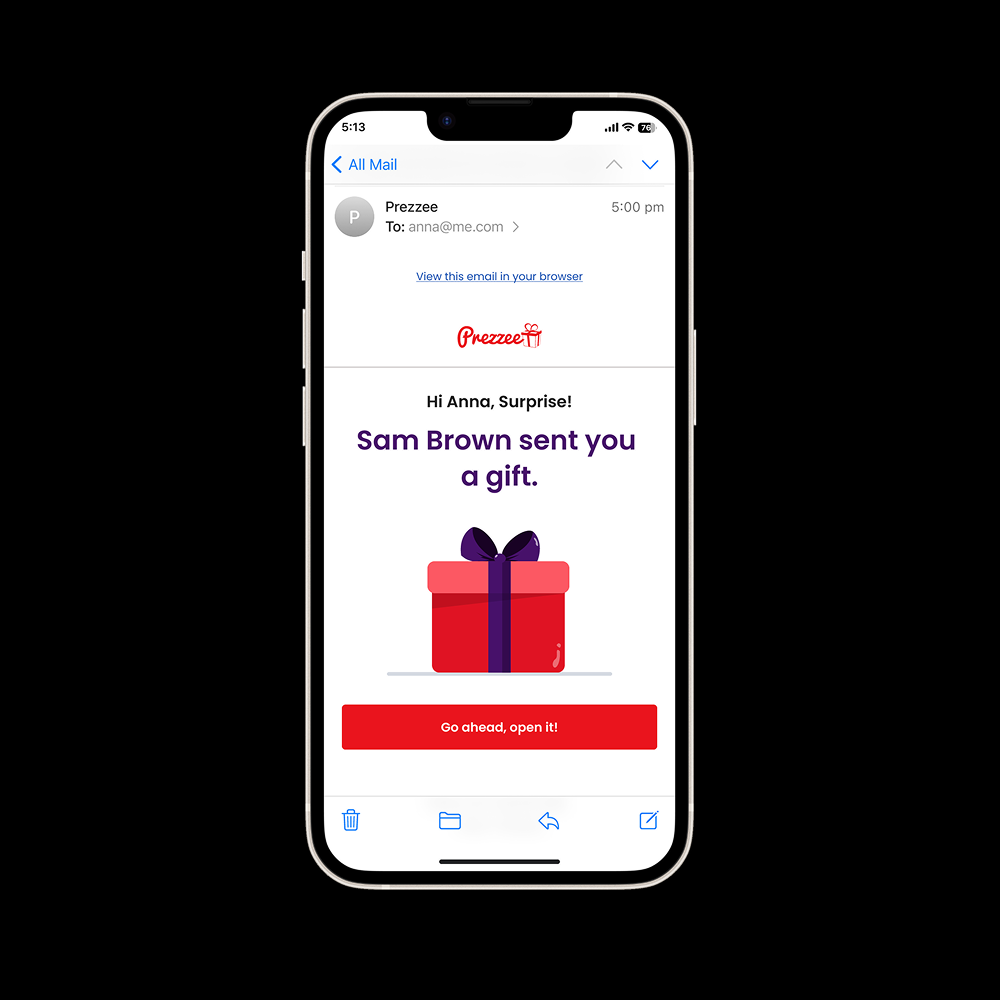
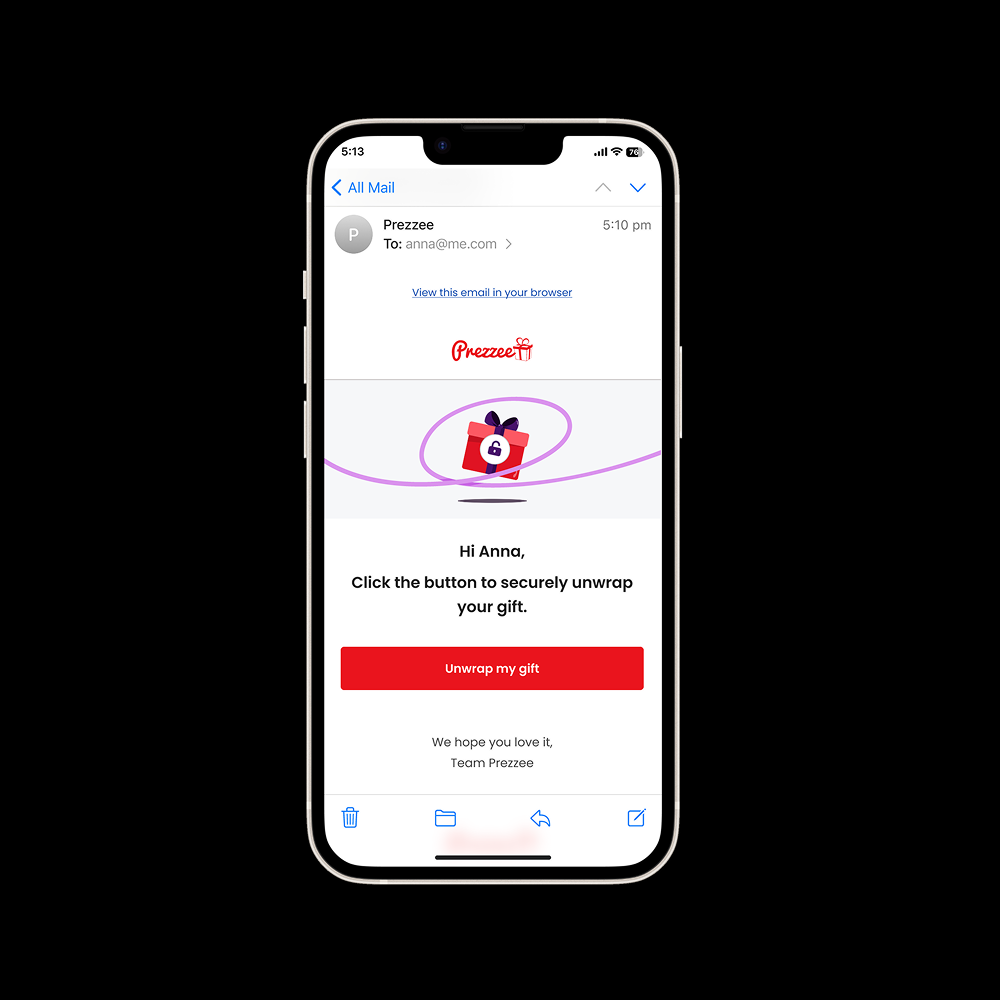
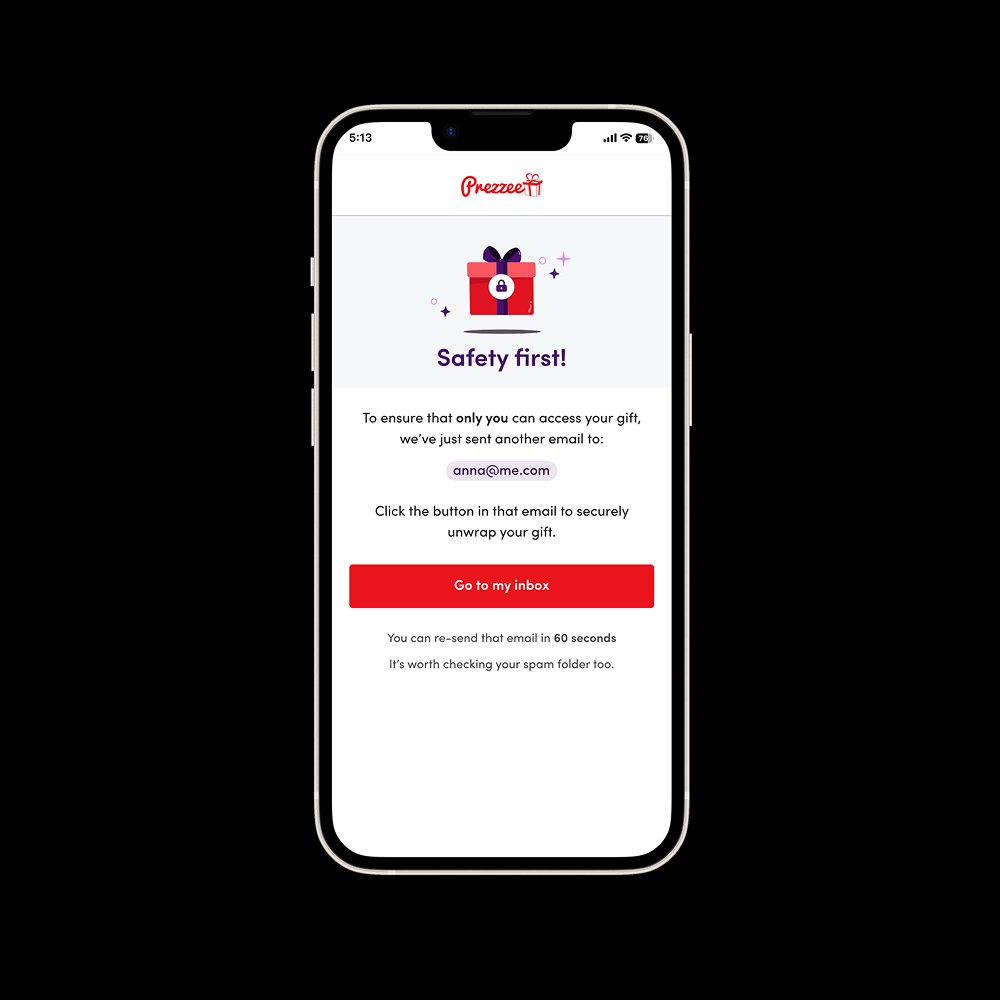
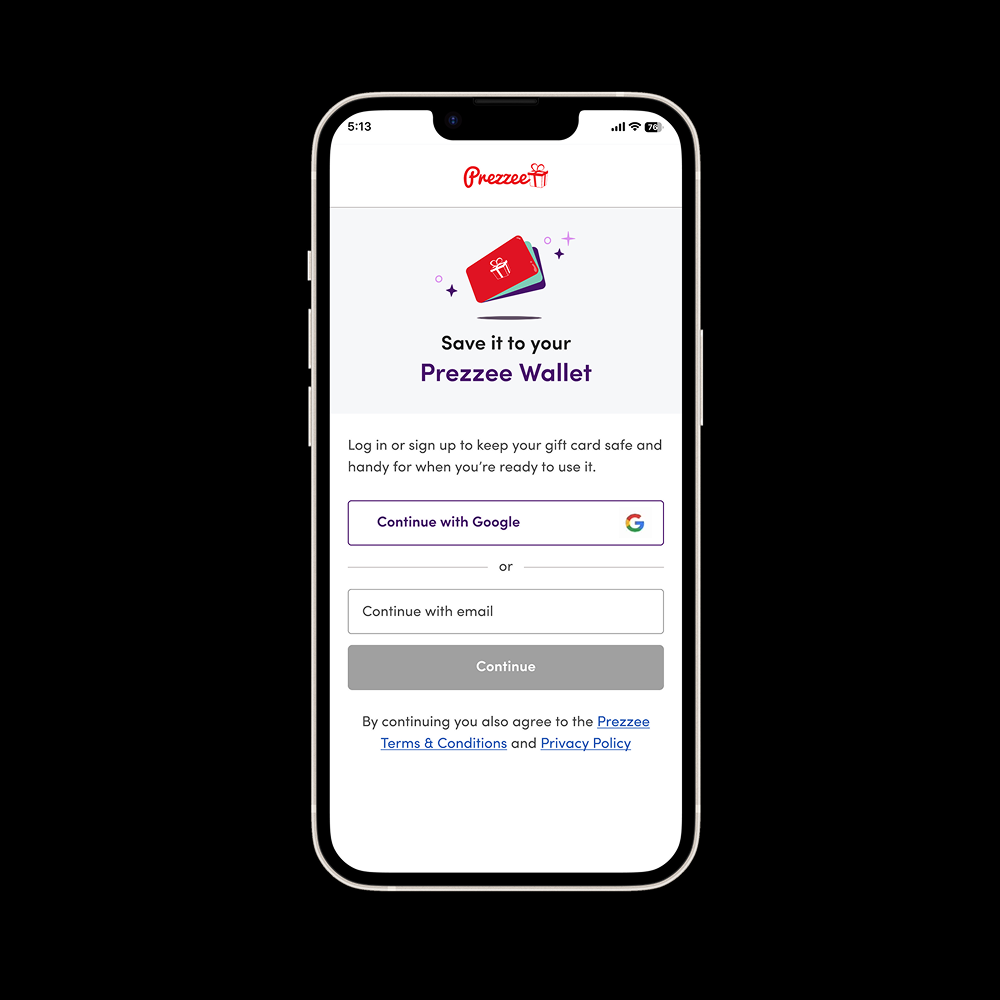
Prezzee got its own wallet, introduced with the intent of giving Prezzee members the opportunity to store all their digital gift cards in one safe, handy place — easily accessible from a central location.
There was a catch, though: it wasn’t easy to use at all, as research revealed. I also uncovered a surprising level of complexity across card variants and redemption processes — similar, but not quite the same.
The UX challenge I faced was to create a simpler, more guided user experience to reduce frustration and enhance users’ joy in redeeming and managing their cards.
Outcome:
Reduced customer care enquiries related to card redemption journeys by ~8%, lowering support dependency.
Reduced Time to Complete (TtC) for wallet redemption journeys by ~15%.
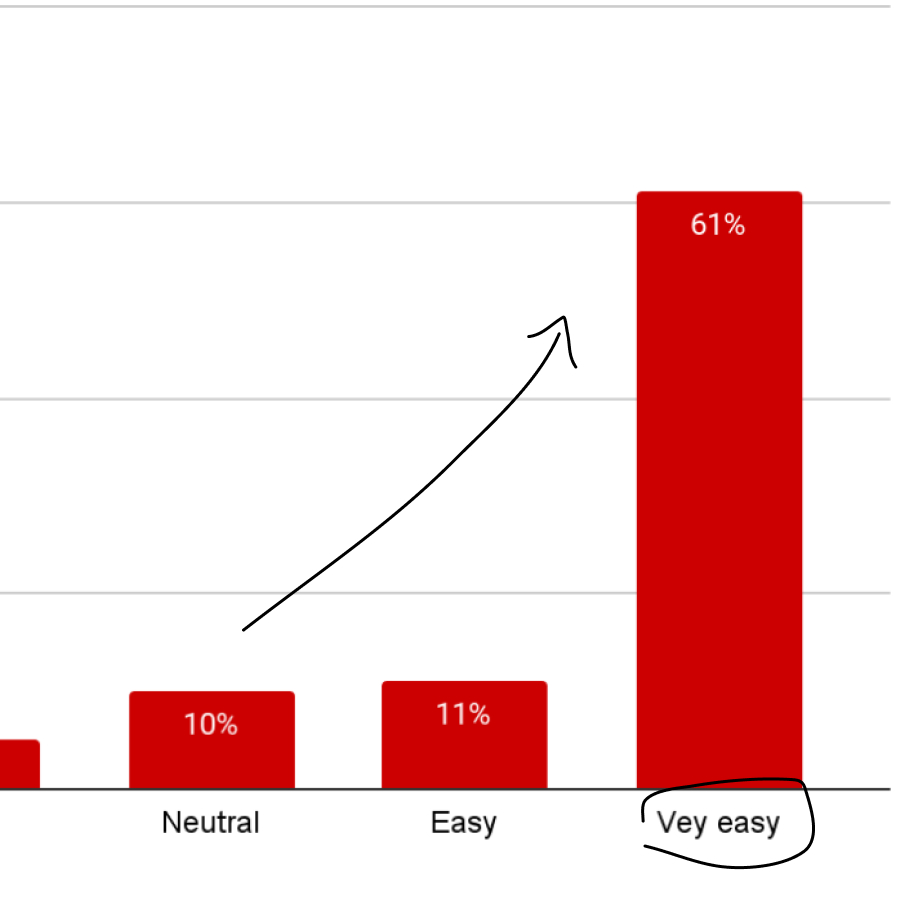
Increased CSAT for the wallet experience by 1.5 points.
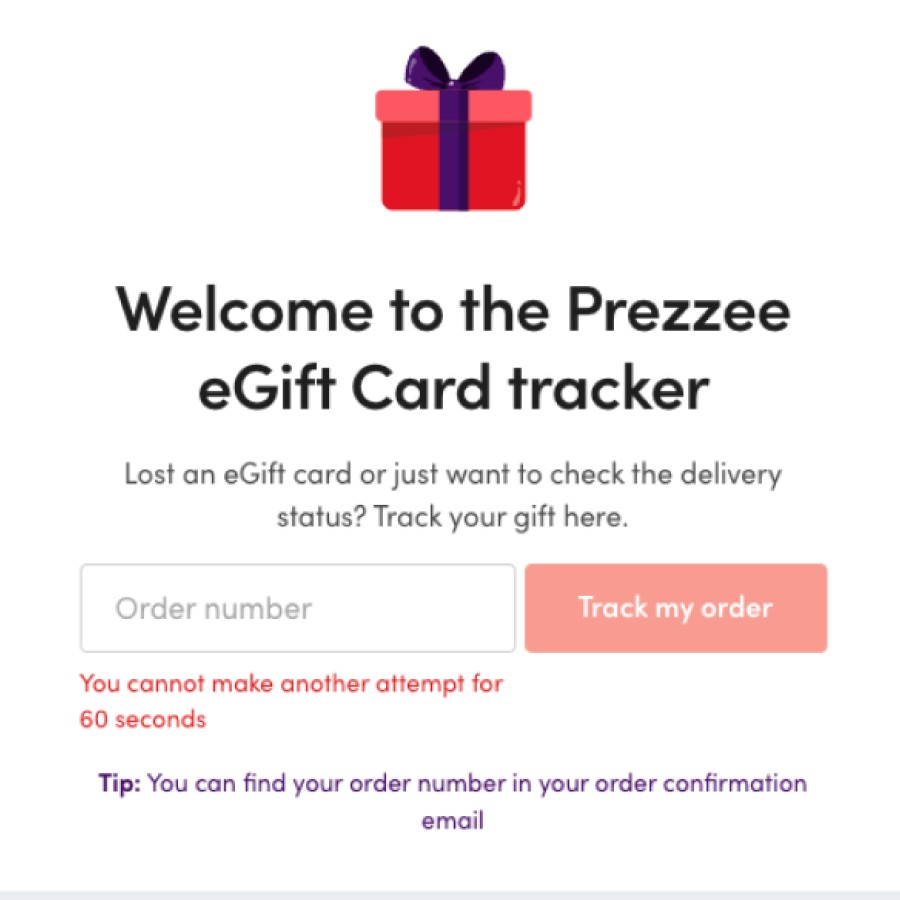
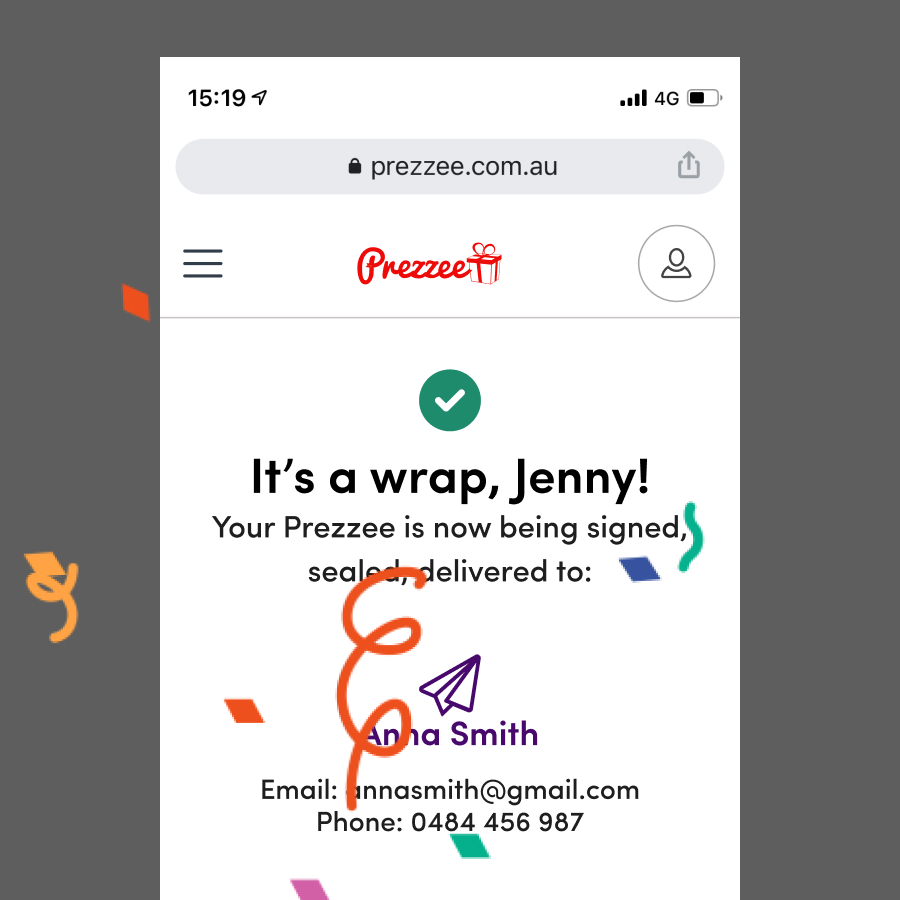
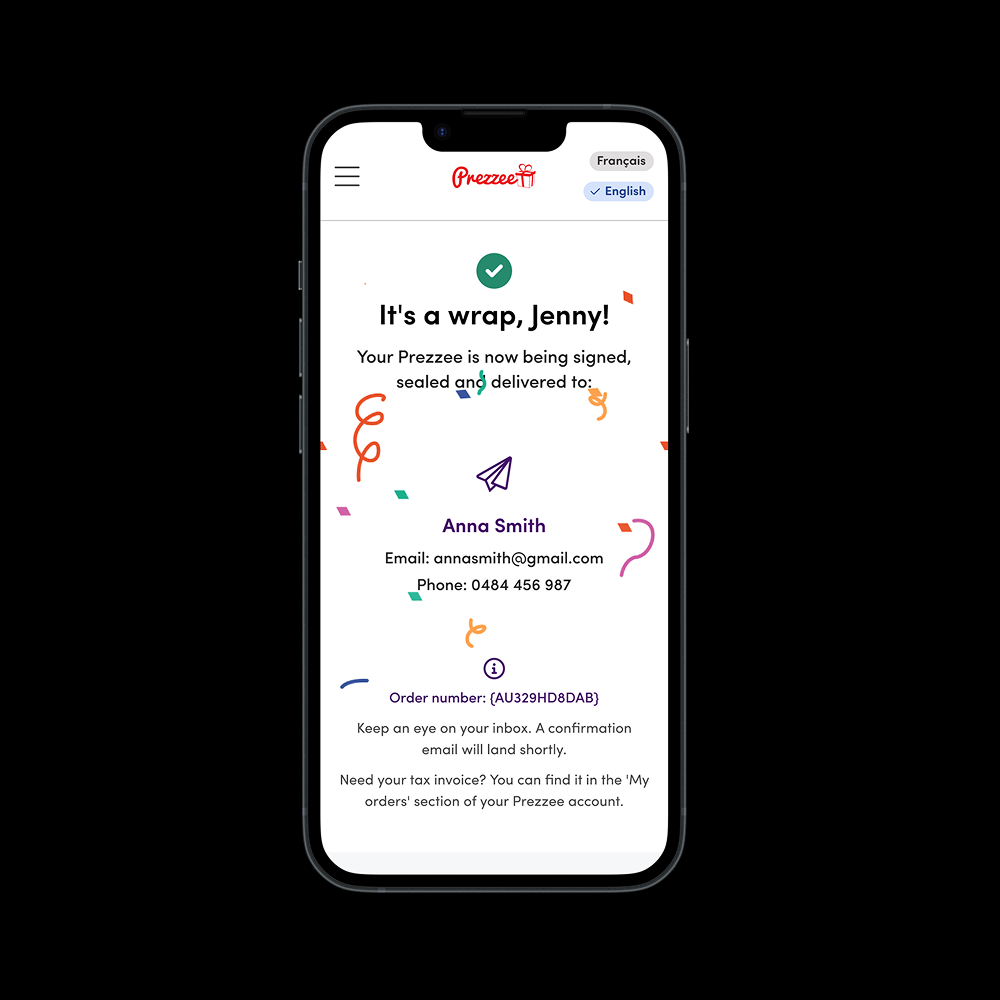
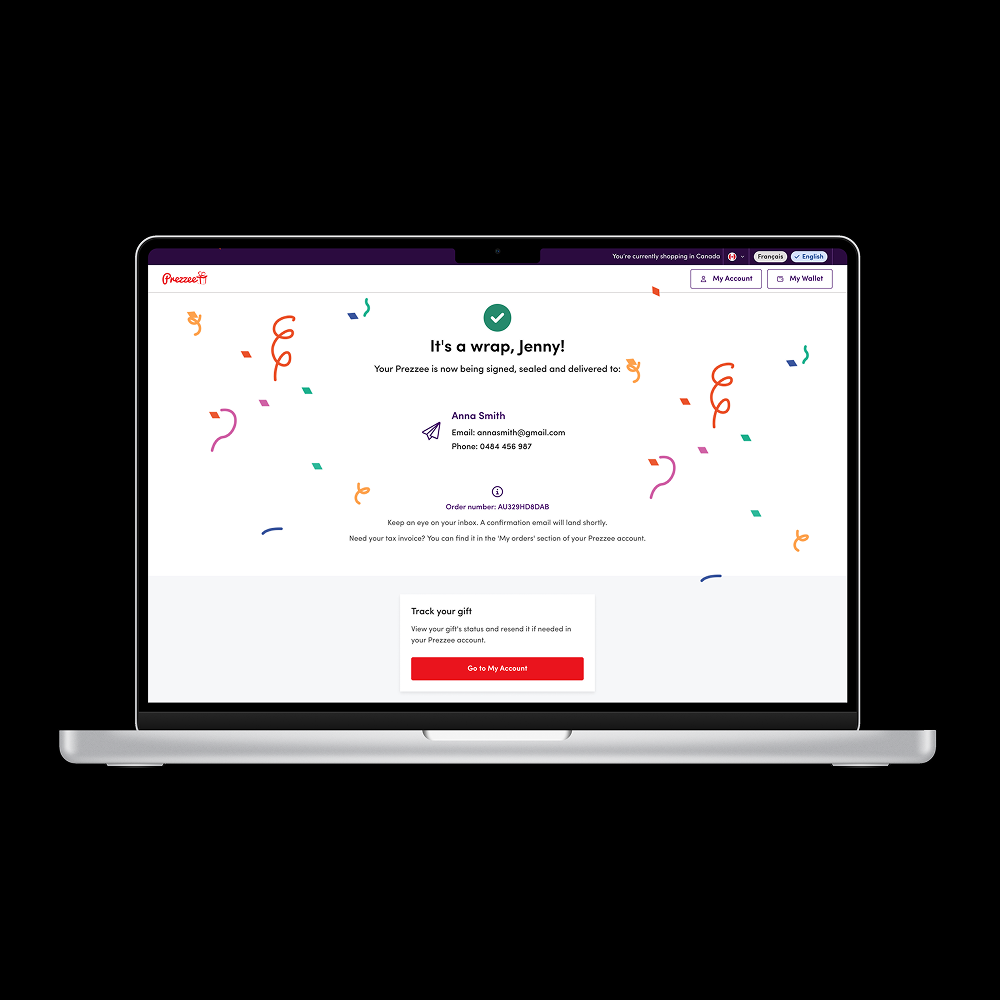
Re-sends are a perennial number-one Customer Care enquiry, and the complexity involved in understanding the problem makes it tough to tackle.
But what exactly are re-sends, I hear you ask?
In a nutshell, re-sends are customer enquiries (from purchasers rather than recipients) who contact our Customer Care team to request that a gift be sent again — either to themselves or to someone else.
UX was asked to enter discovery mode and develop an action plan to reduce re-sends and the associated Customer Care enquiries.
Our journey broke down barriers, bridging squads and analysing B2C and B2B2C flows in an attempt to gain a full understanding of the problem.
Outcome:
Reduced consumer web customer care enquiries by ~20% through journey optimisation and issue prevention.
Established cross-functional alignment with Partnerships and high-volume white label partners to proactively mitigate purchase friction upstream.
Improved issue resolution pathways for anonymous users by optimising authentication within the Gift Tracker experience.
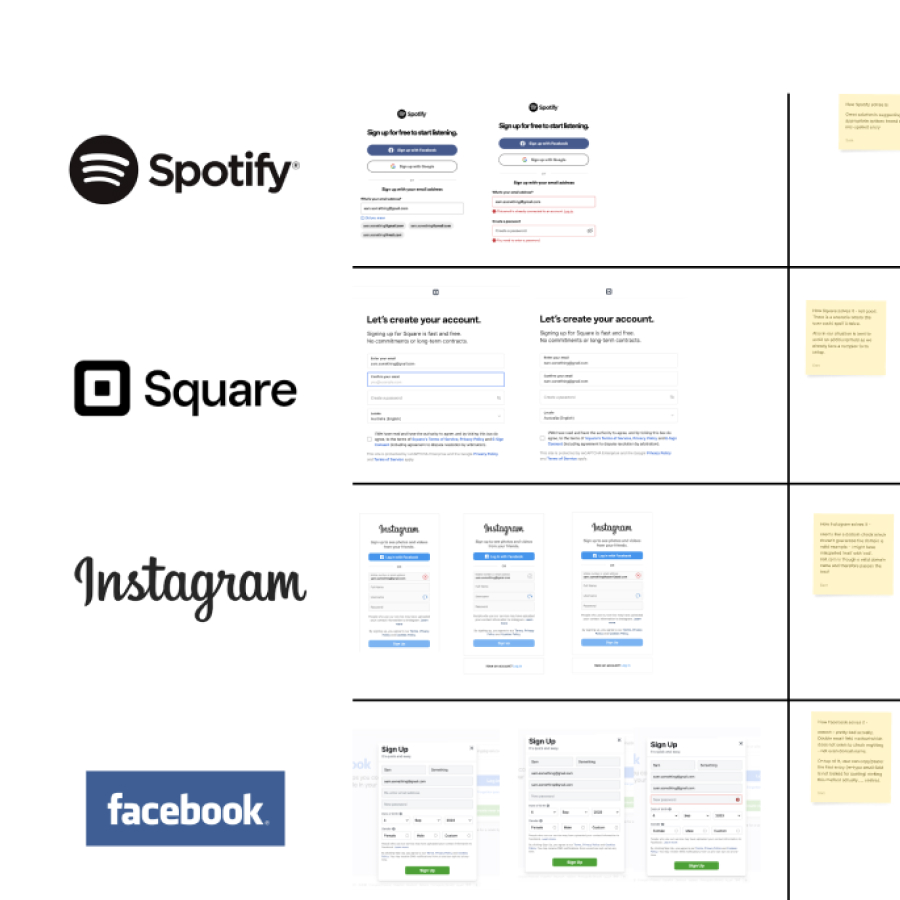
As a business operating in multiple countries around the globe, Prezzee is exposed to a fair share of fraudulent activity.
As the business continues to expand, along with the number of users and overall exposure, so does the risk of fraud. The UX challenge we were given was:
How can we reduce fraudulent activity within the purchasing experience, while considering the impact on sales and revenue?
How can we lower the Customer Care burden linked to false/positive users, and improve their experience?
Outcome:
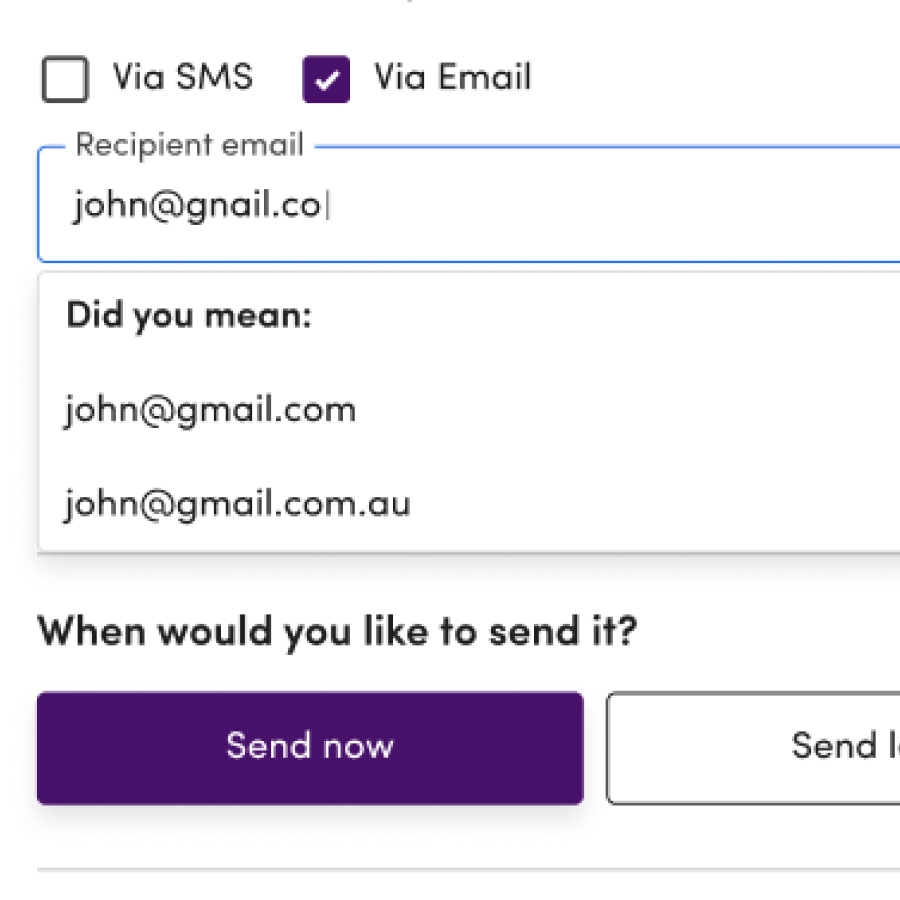
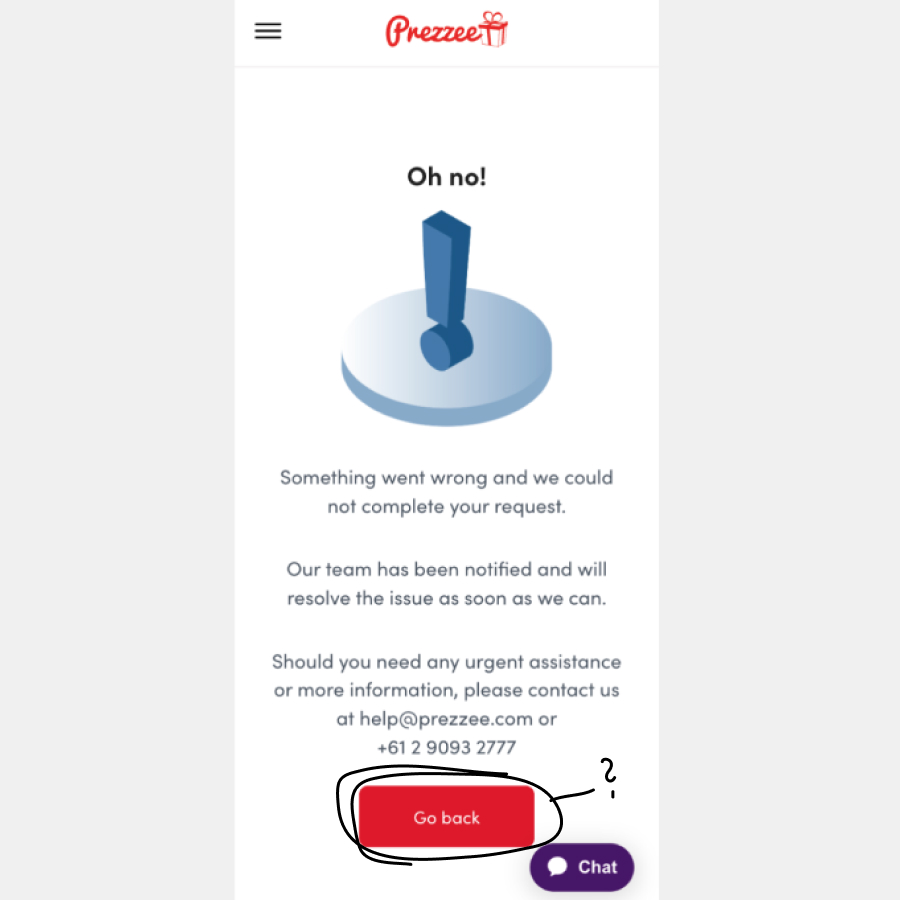
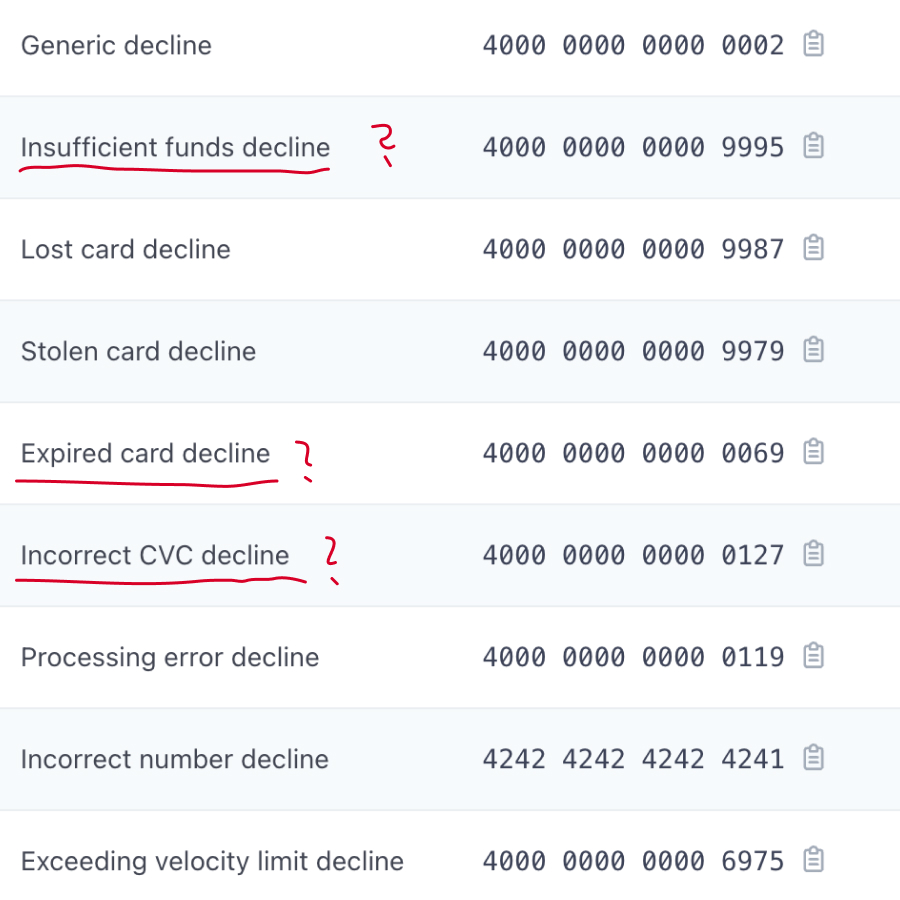
Redesigned error handling across UI, content, and actions to deliver a more intuitive and forgiving user experience.
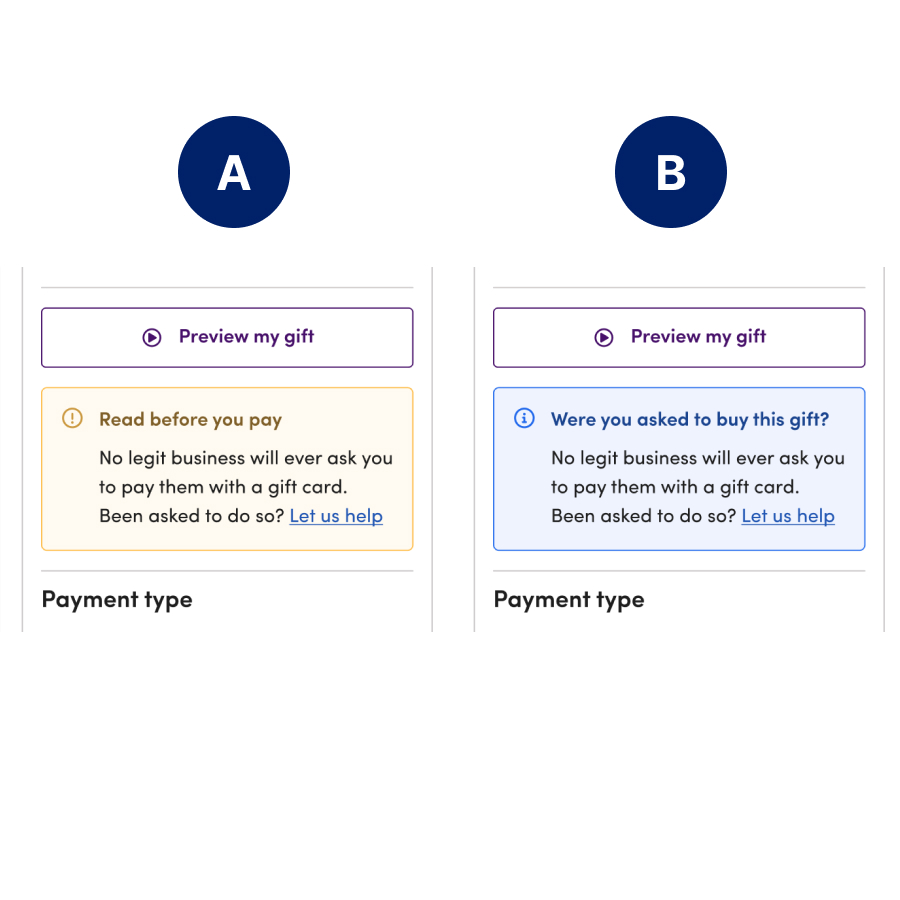
Launched and iterated an A/B tested purchase flow, increasing user awareness by ~5% on the consumer web (AU).
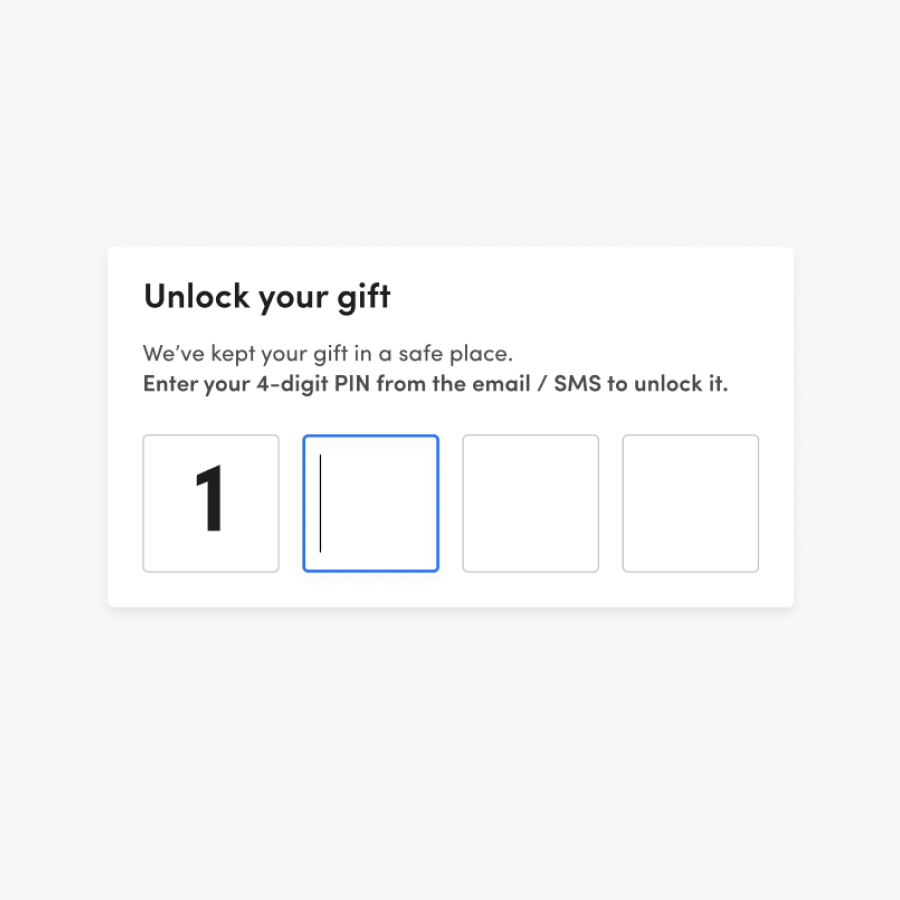
Influenced business prioritisation of authentication methods, accelerating evaluation of password-less solutions and informing roadmap decisions (see Password-less Case Study).
A selection of product (UX/UI) design projects showcasing design thinking, end-to-end problem solving, and data-informed solutions.
Smart Card – Front
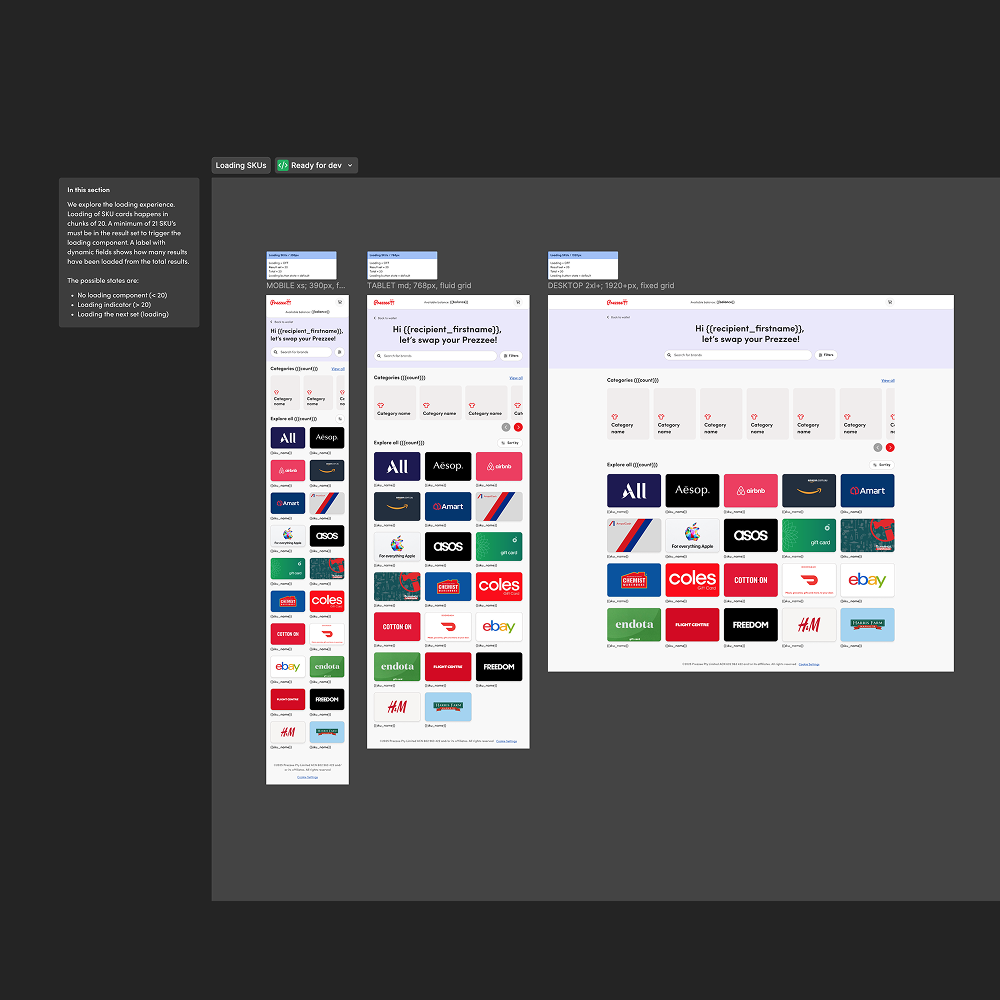
New Swap
New Swap – Search
New Swap
New Swap – Cart
Gift Email
Magic Link
OPT Notification
Social Login
Post Purchase
Post Purchase
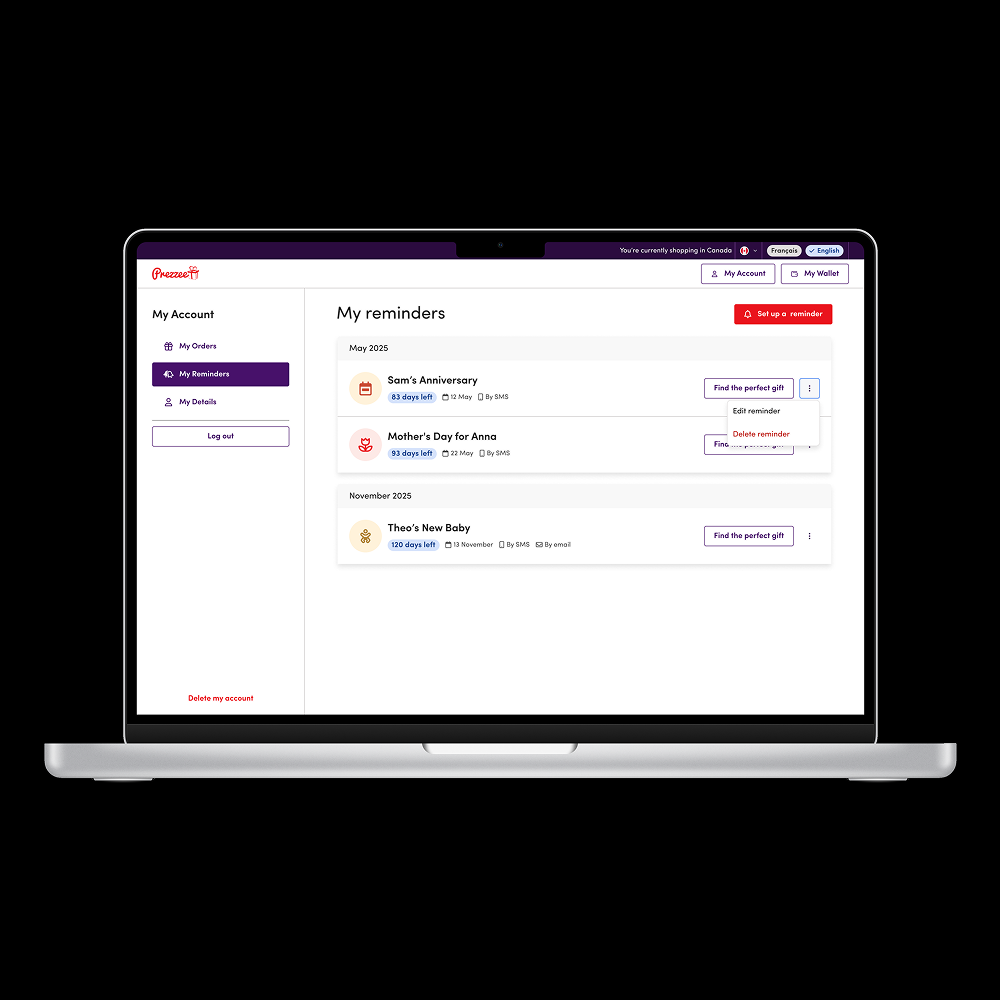
Gift Reminders
Gift Reminders
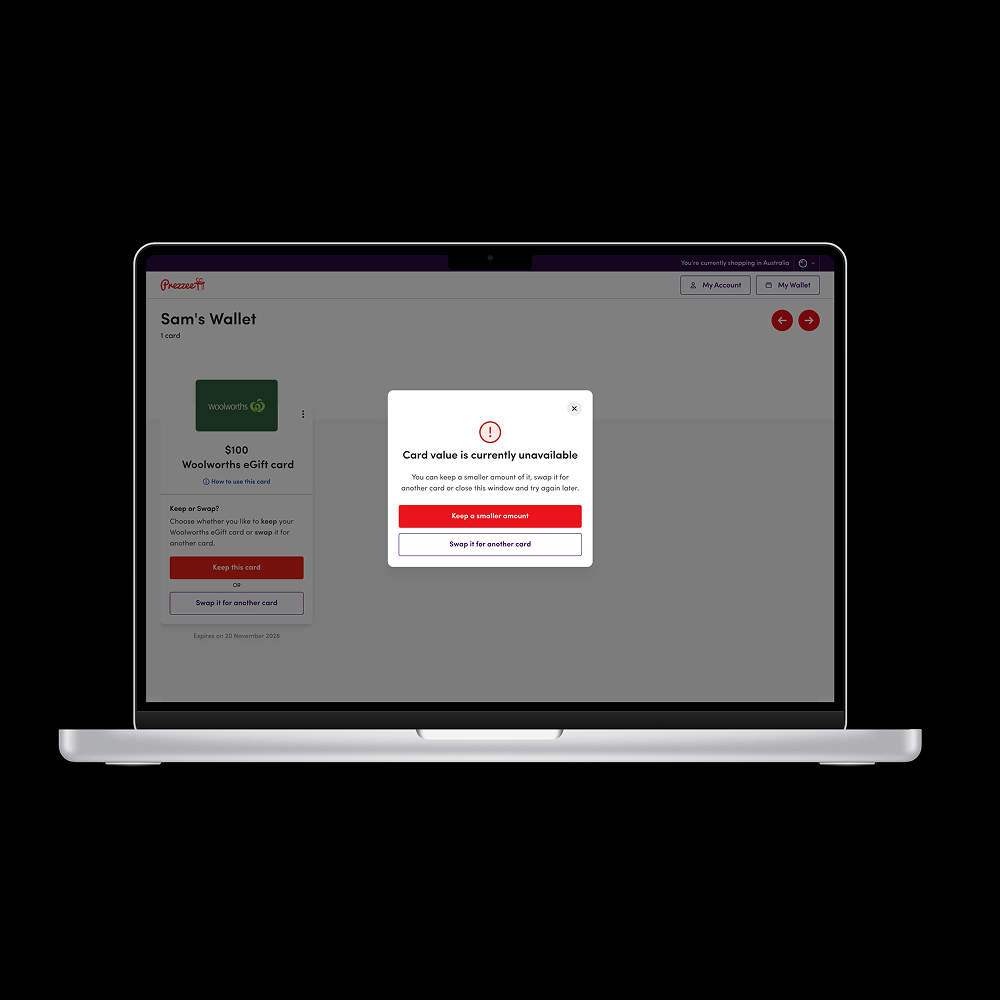
P+ Error
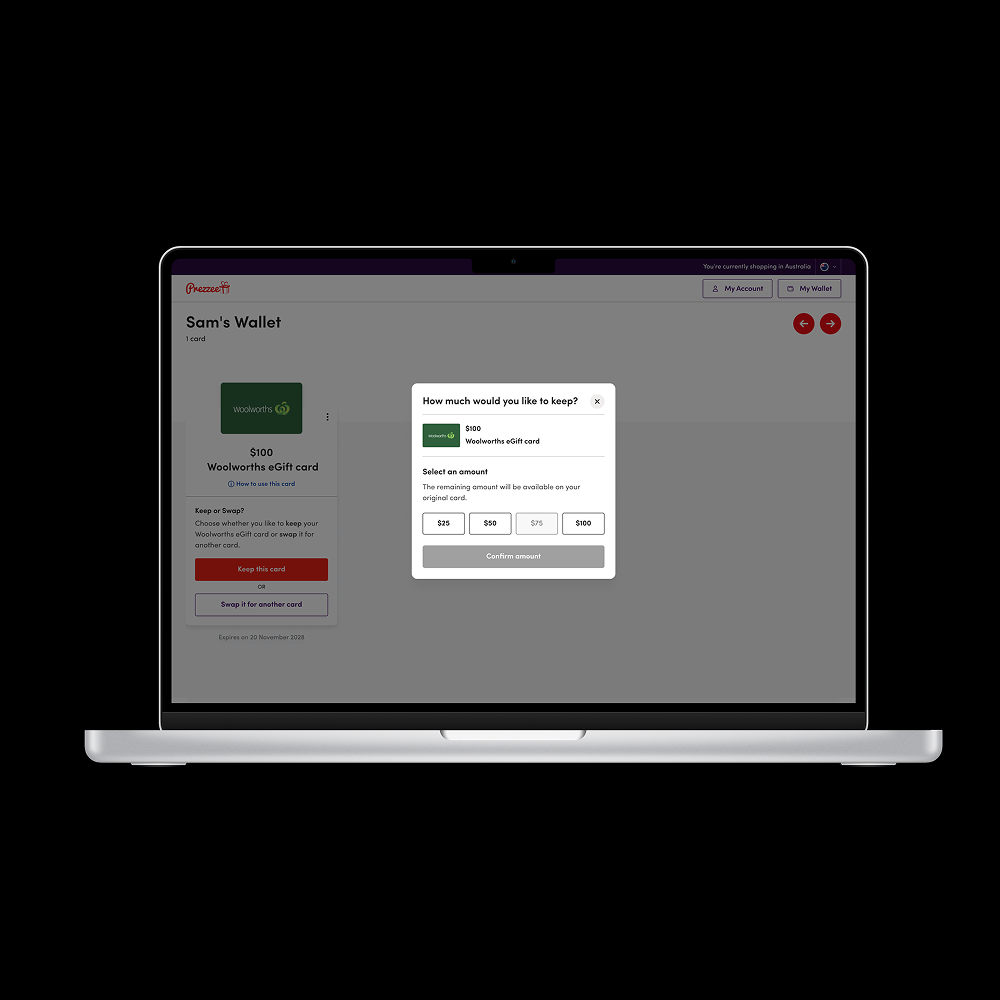
P+ Partial Keep
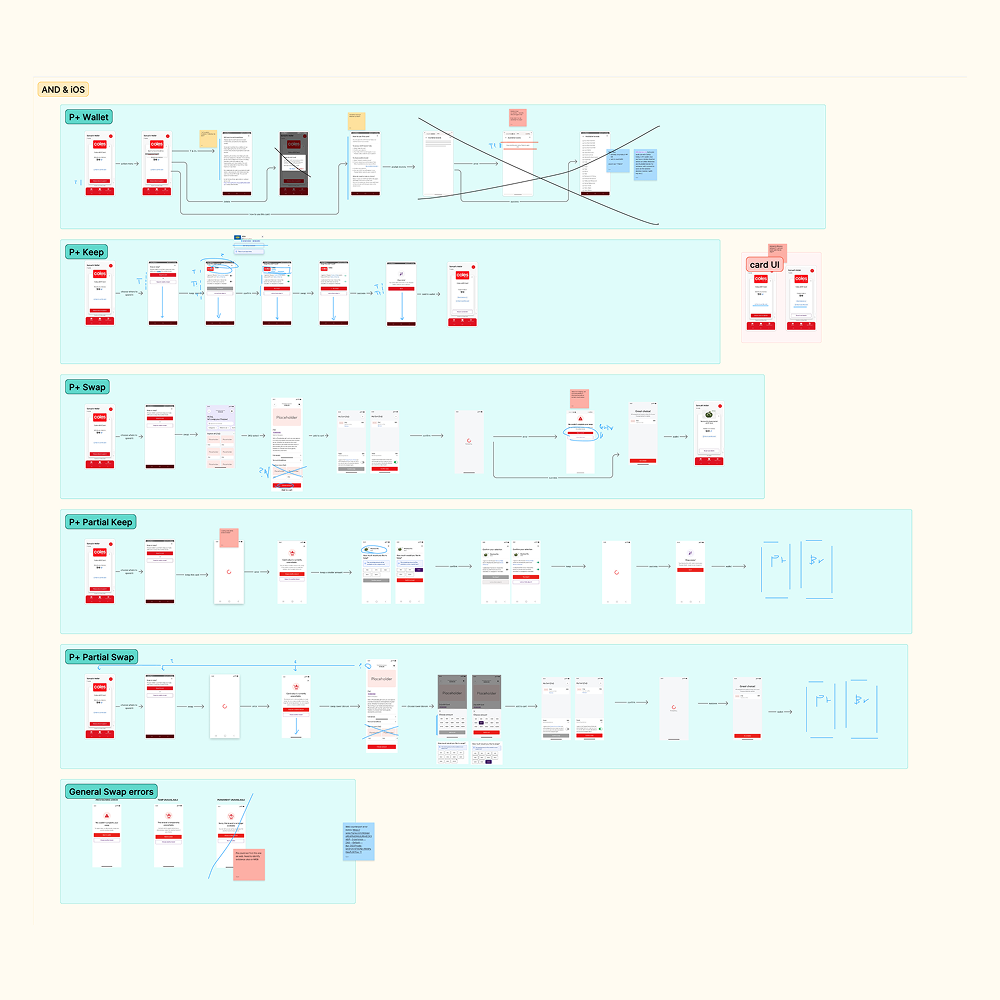
Audit / Flow
Figma Artefact
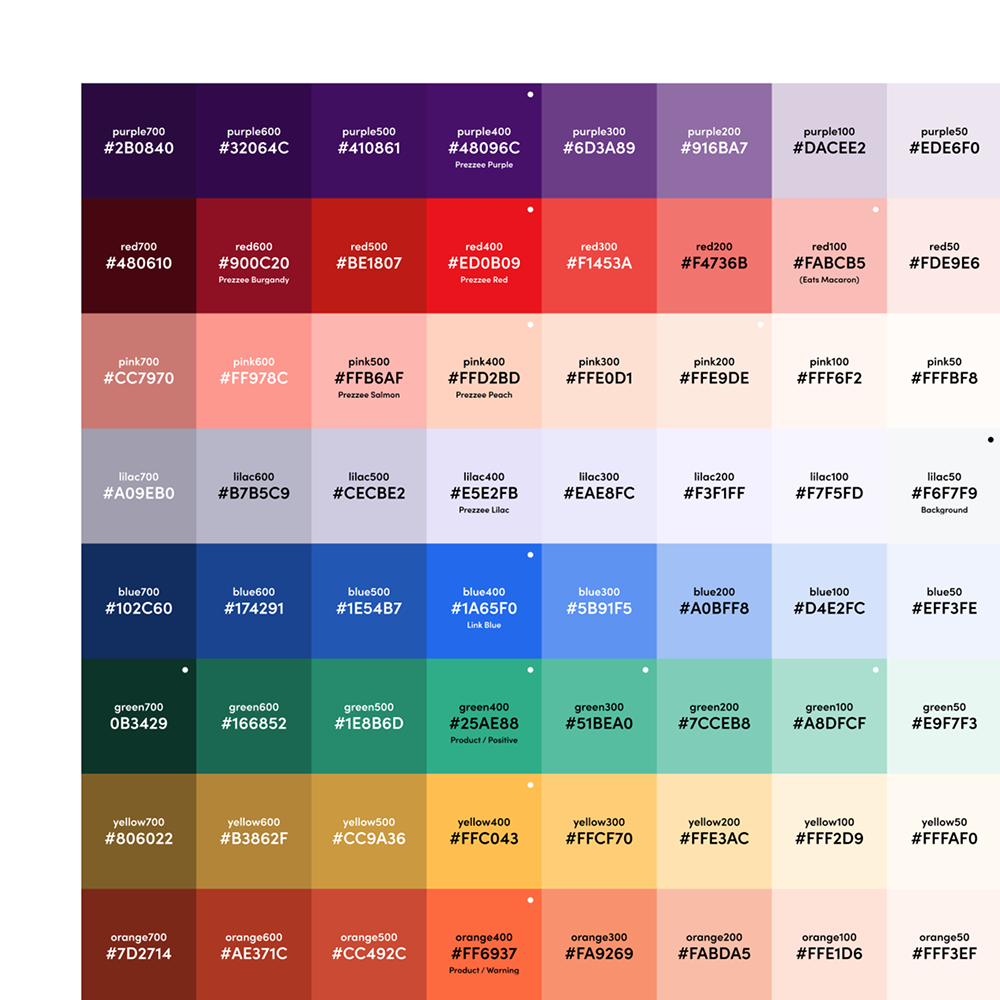
DS Colours
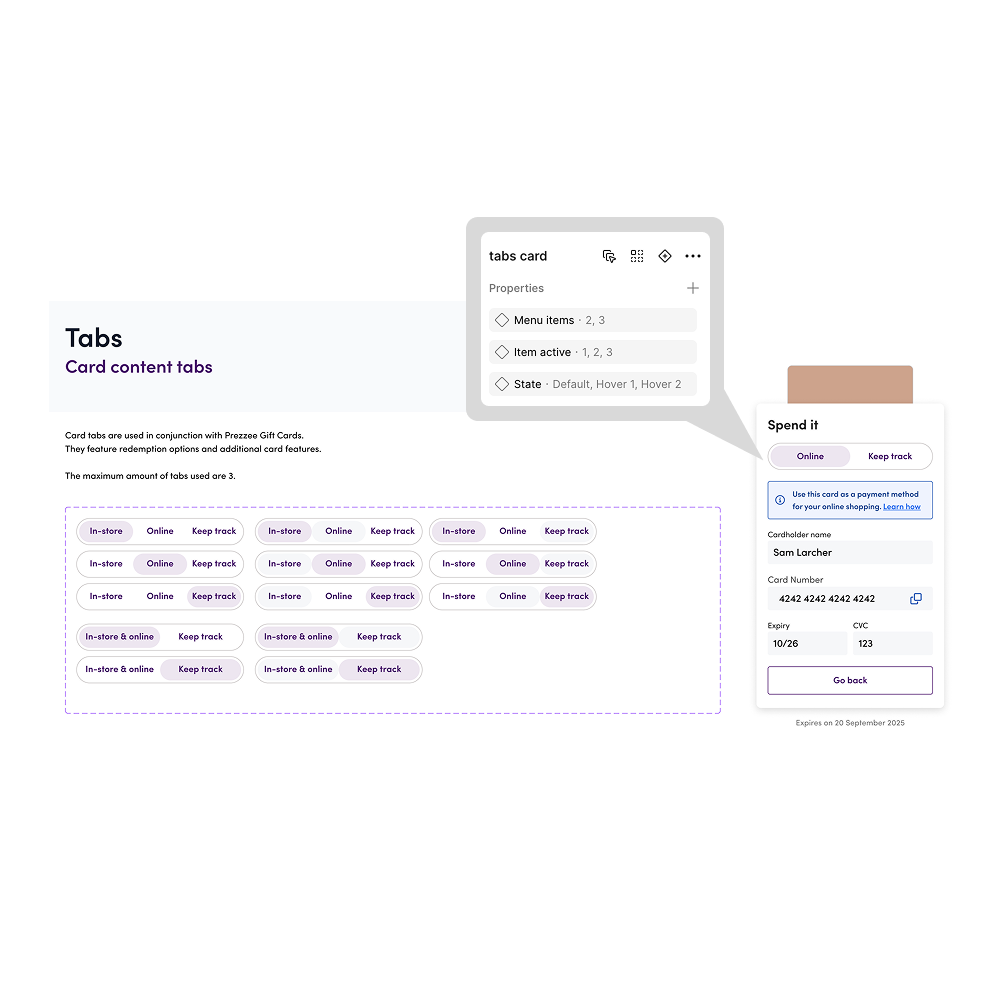
DS Component
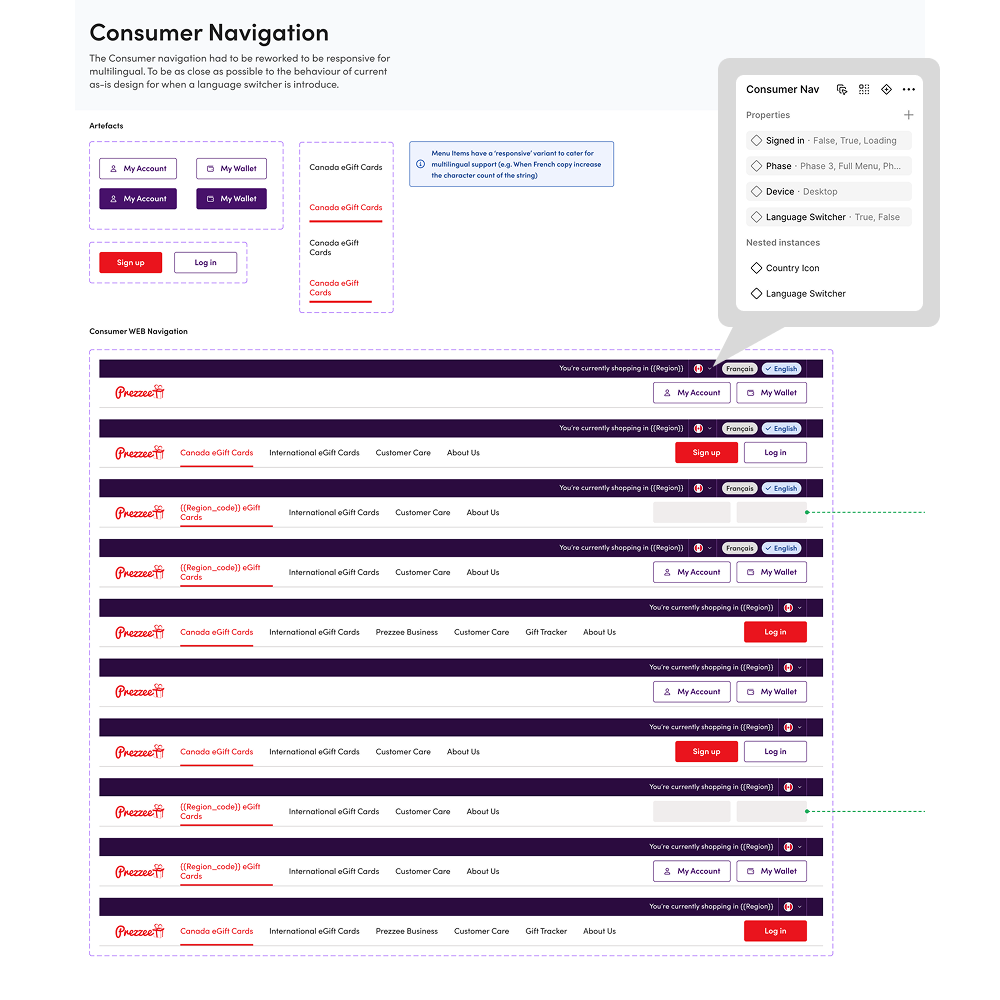
DS Navigation
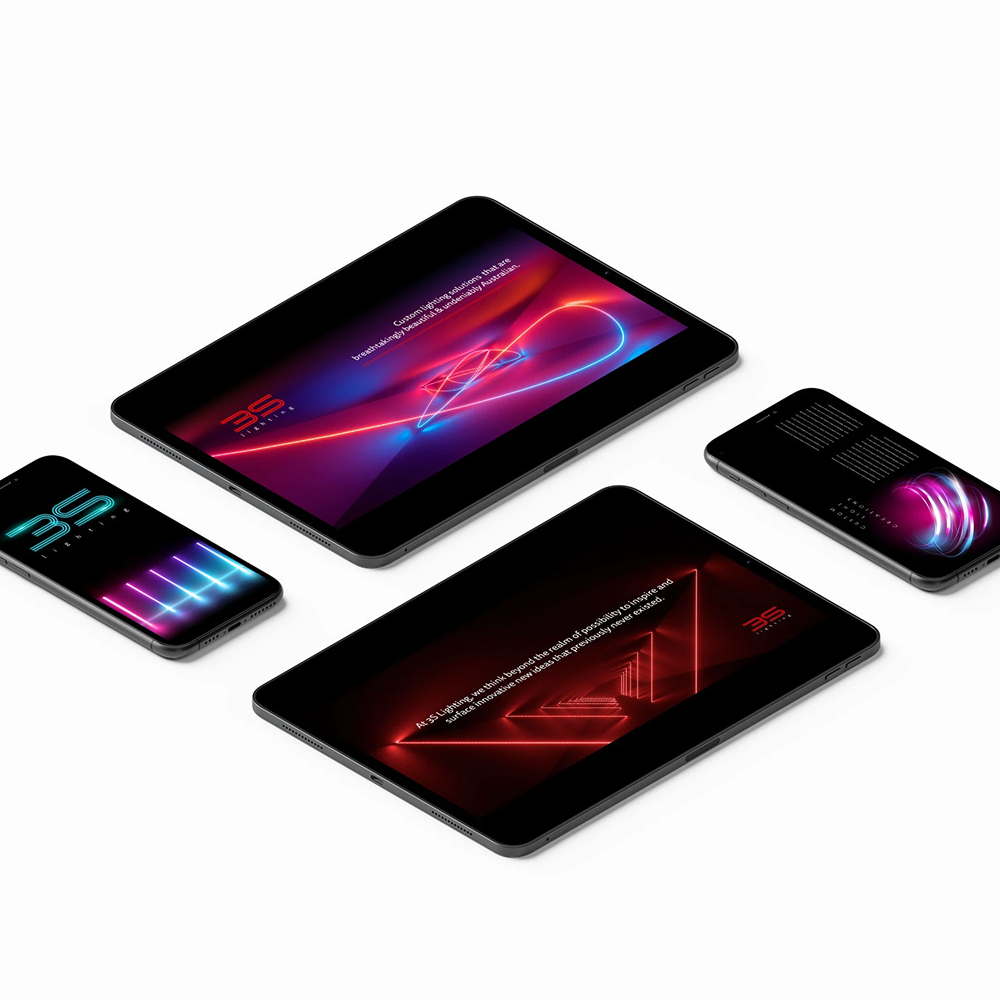
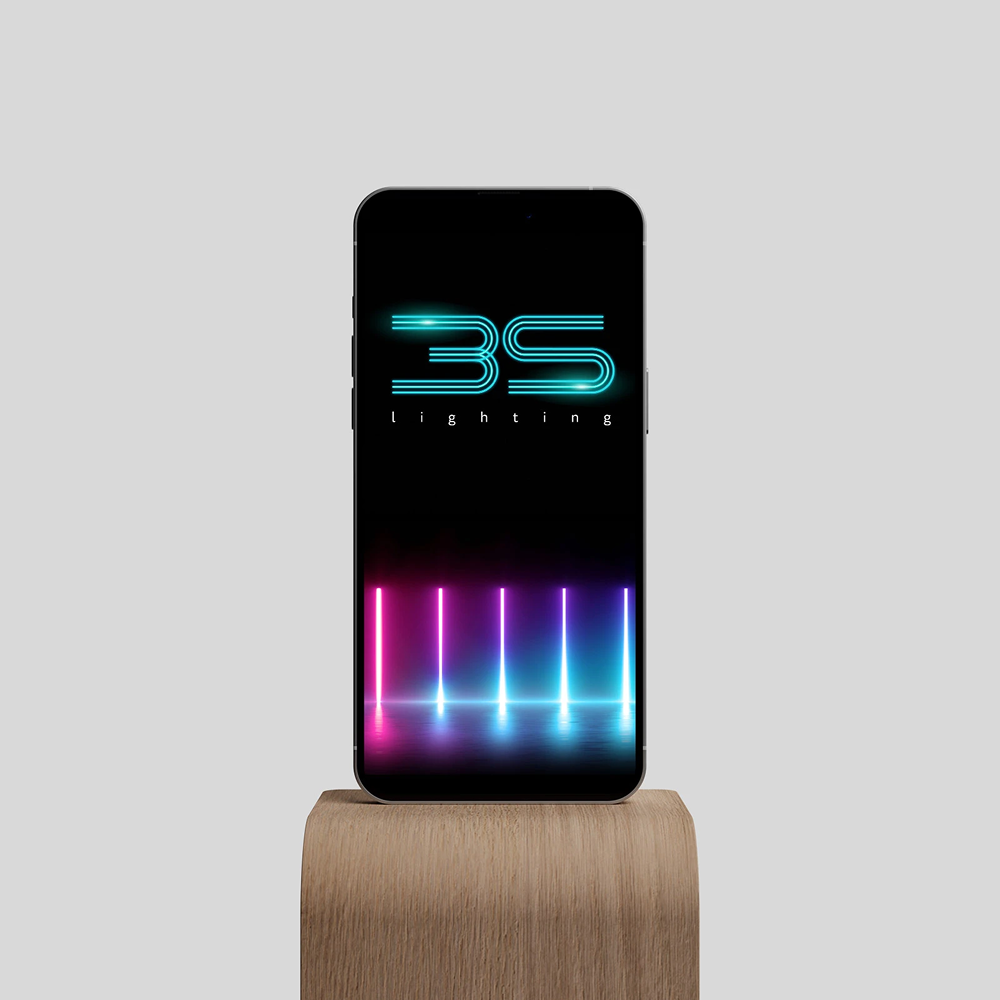
3S
3S
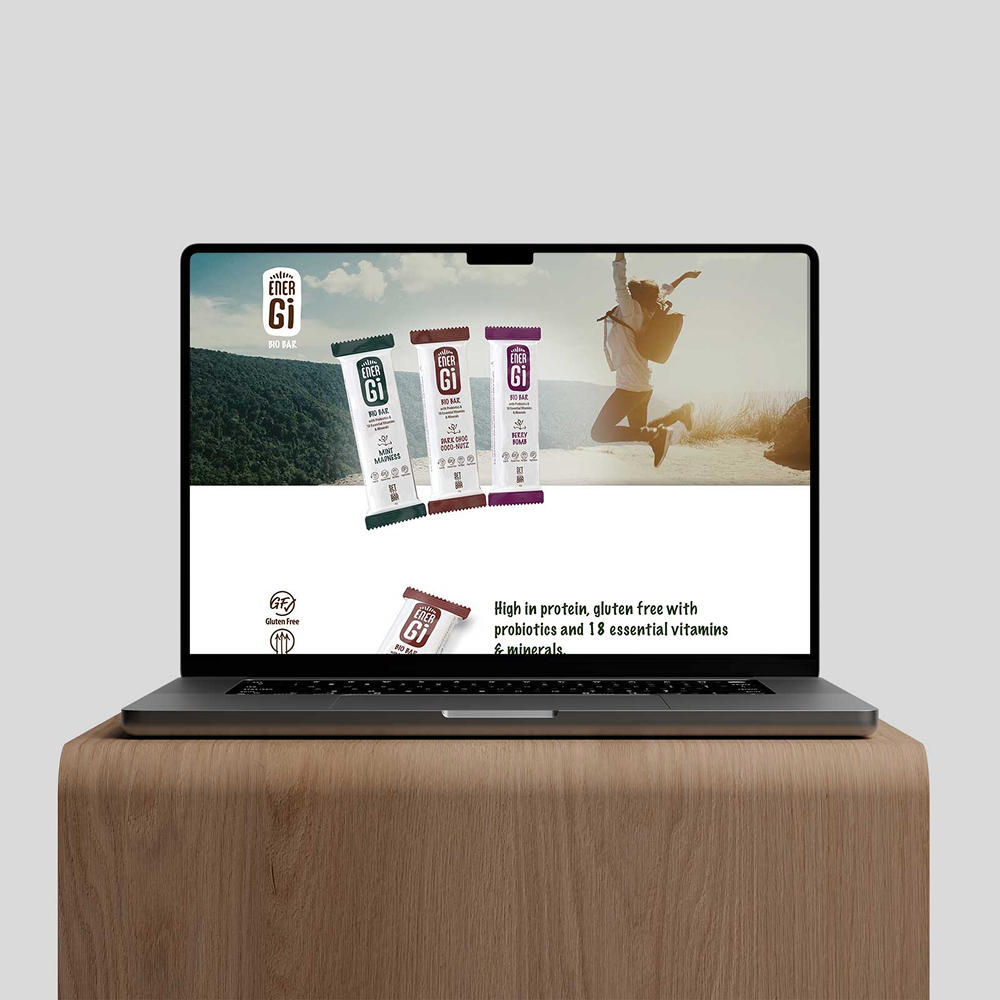
EnerGI
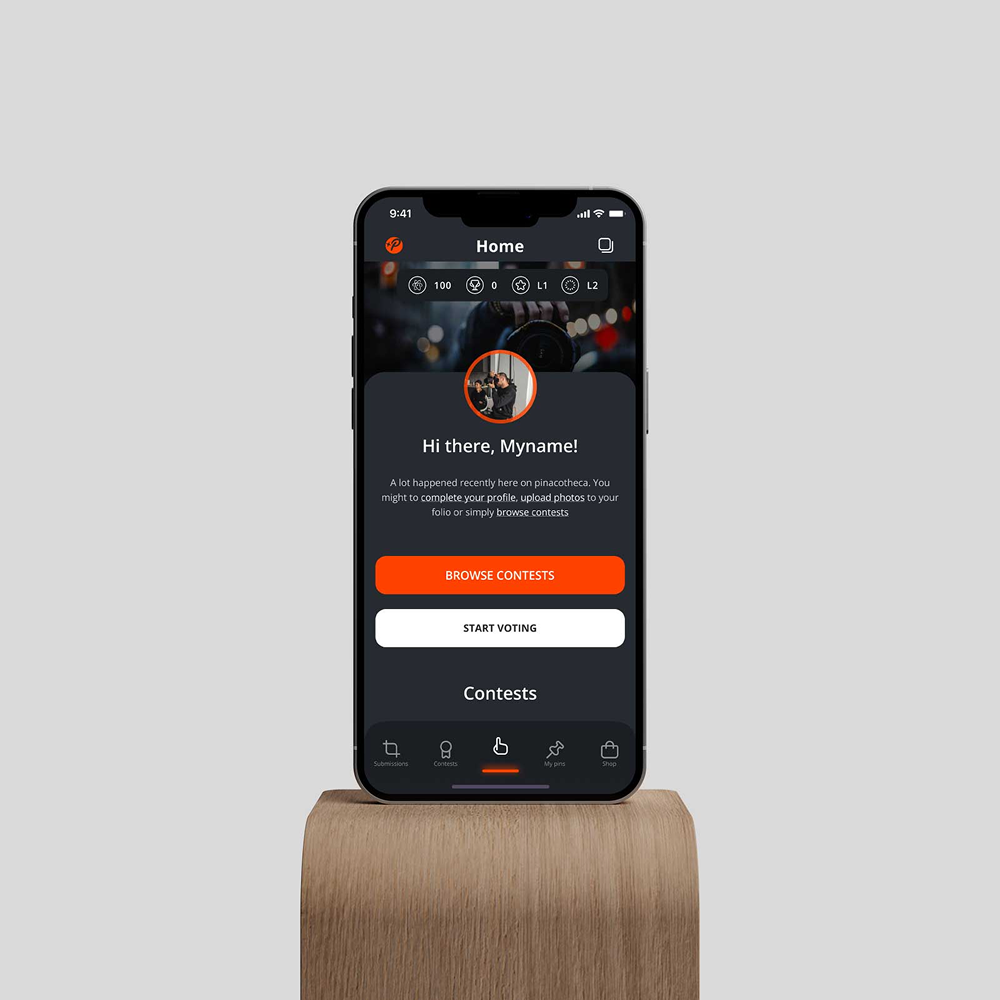
Pinacotheca
Pinacotheca
Norfolk Homepage
Norfolk Homepage
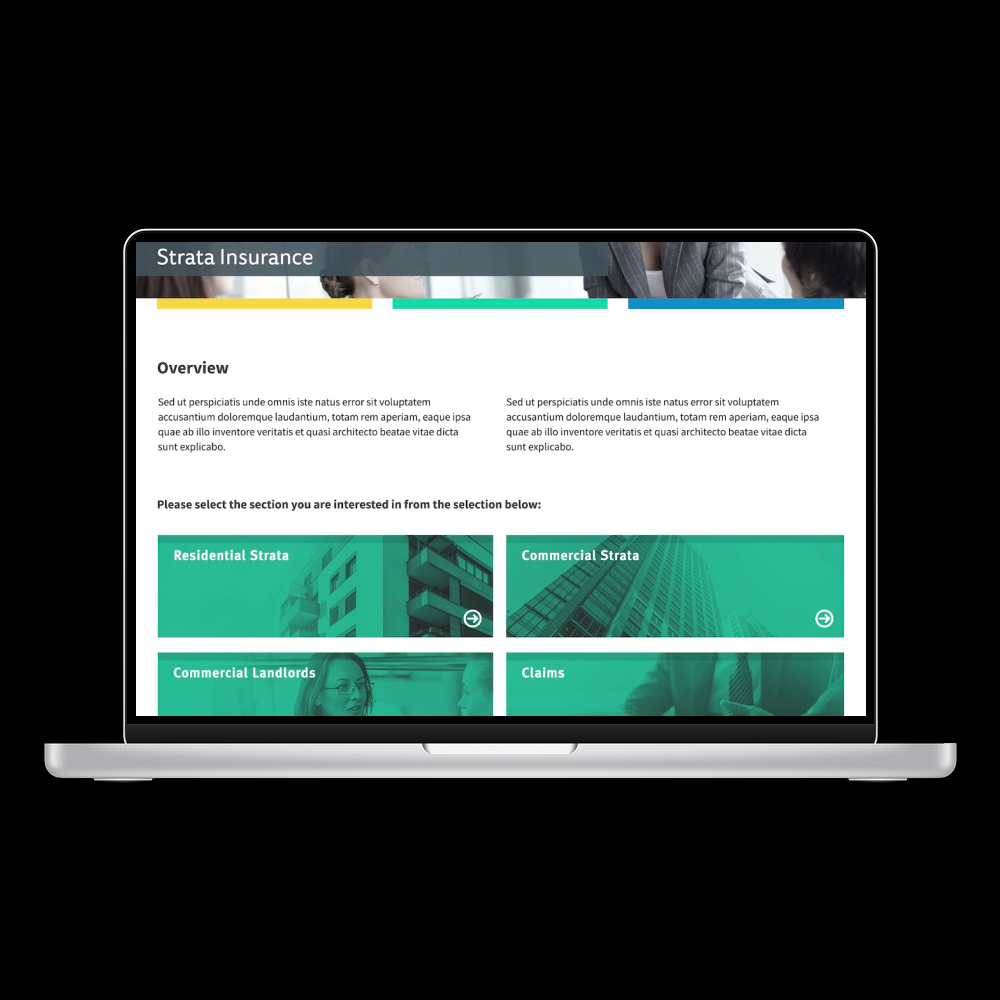
SUU Strata Insurance
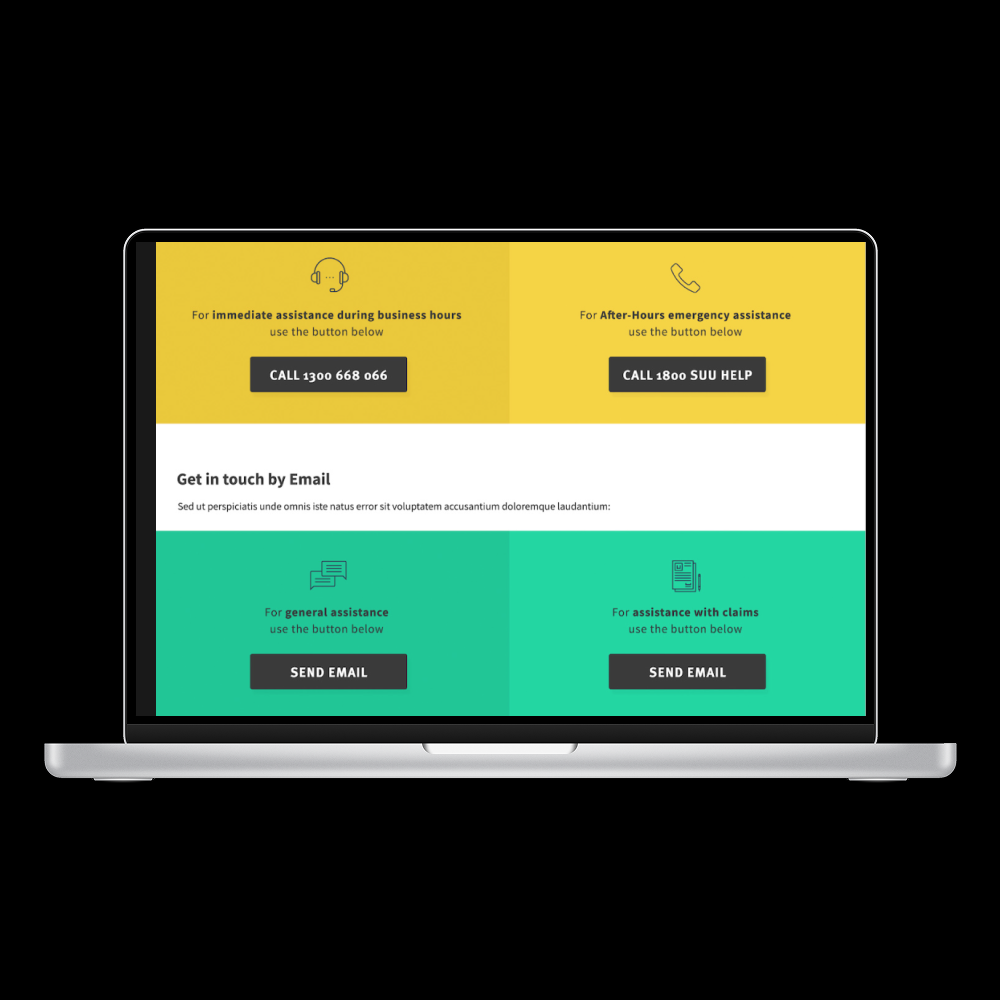
SUU Contact
SUU Teaser
SUU Teaser
SUU Teaser
Partial Keep & Partial Swap
Prezzee
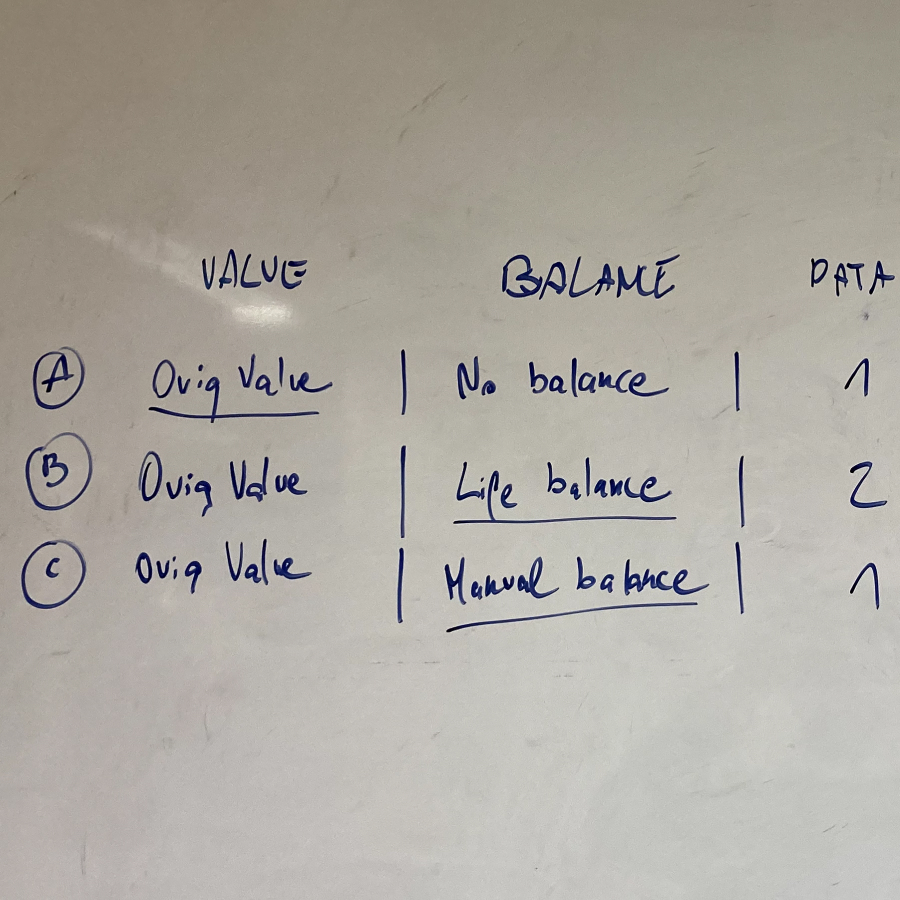
To understand how UX came to the suggested solution of using a new swap process ‘Partial Keep & Partial Swap’ we need to wind all the way back to the original problem – Odd denominations & Out Of Stock events – which in certain scenarios lead to a dead-end swap situation to users, unable to redeem and use their Prezzee digital gift cards. This sounds pretty bad, agreed.
It sounds even worse when coupled to the fact it got flagged prior our peek Christmas period and linked to a potentially exponential increase of CC enquiries and affecting in-store / self redemption customers whose experience would be dramatically affected by such events.
Our UX process here was a windy road, going through discovery and push backs of suggested hot-fixes to land eventually to a practical solution which, not only tackles the outlined problem but could also be leveraged to replace our dated multi-swap flow experience.
How about an iOS App which helps users in their research and decision process of getting their next car by matching a vehicle to them via an interactive assessment process?
Would it work? And if yes, what challenges and risks would there need to be considered?